
BOXBOT Autonomous Delivery & Storage Solutions
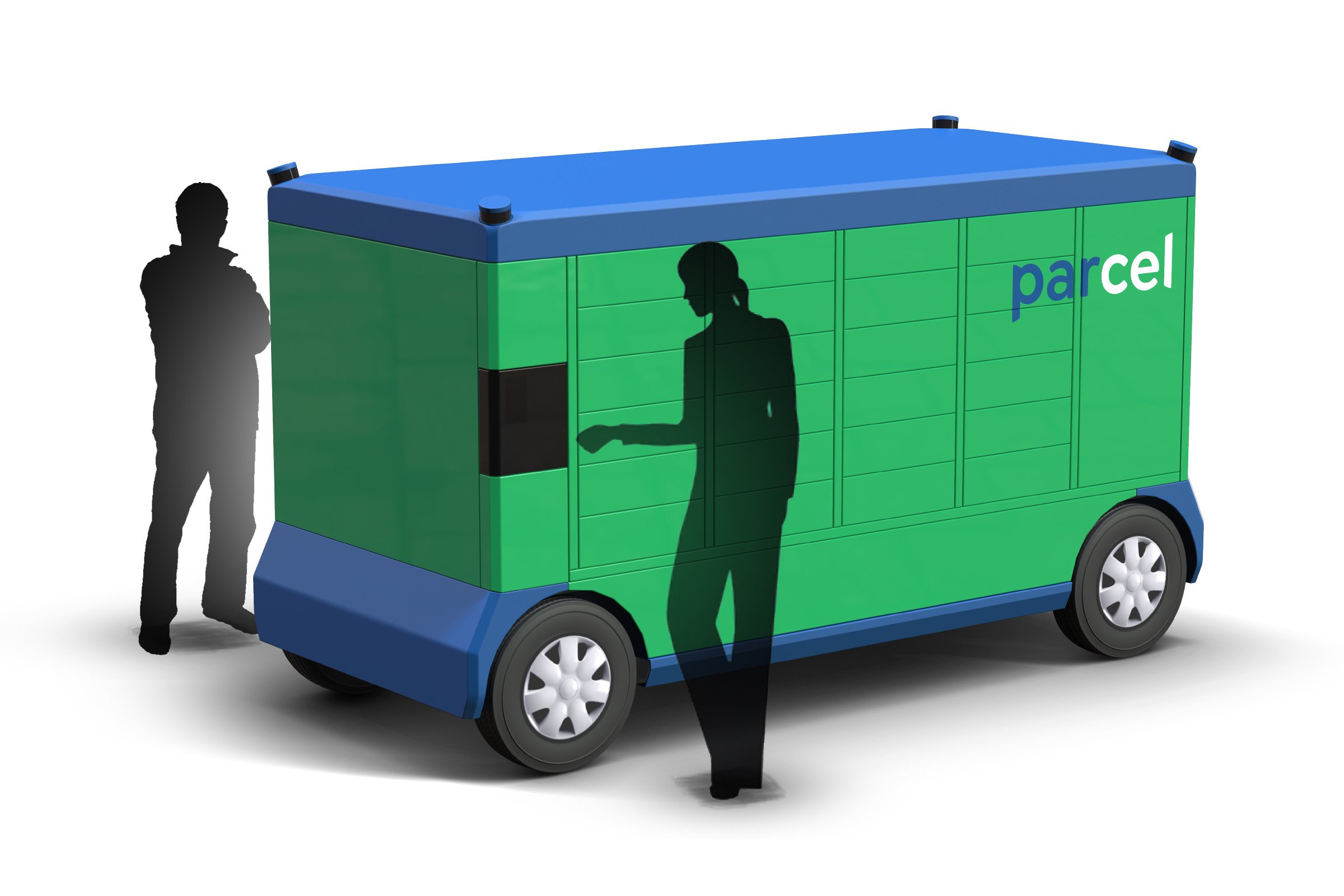
CONCEPT ART, 3D MODELS, RENDERINGS
DISCIPLINE(S): Industrial Design
ROLE: Principal Industrial Designer (sole designer; full-scope ownership from concept through production handoff)
SKILLS & TOOLS: Sketching, Photoshop, Solidworks, Keyshot, Figma
Boxbot* is a San Francisco startup applying robotics and autonomous technology to last-mile delivery logistics. I led exterior design for the company's autonomous delivery vehicles, taken to production, and shepherding the visual identity carried across the vehicle fleet and distribution infrastructure.
*Actual company name; ‘Parcel’ used in imagery below to protect the brand during vision realignment.
Problem/Opportunity
Last-mile delivery is the most expensive and least efficient leg of the shipping chain, and most automated solutions treat it as a vehicle problem — building a better robot — without addressing the neighborhood-scale infrastructure that robot depends on.
An autonomous vehicle sharing sidewalks and streets with pedestrians carries a trust problem before it carries a single package: people need to read it as safe and predictable, not just functional.
Goal
Design a delivery vehicle that could operate comfortably alongside pedestrians, concealing the complexity of its autonomous systems behind an approachable exterior.
Design the neighborhood distribution infrastructure the vehicle would depend on, and evolve both in tandem as the company's understanding of the problem matured.
Impact
Vehicle exterior designs were taken to production.
The distribution center concept evolved from a small neighborhood footprint into the company's primary strategic focus — a shift the design work itself helped surface.

Ideation & Development
Boxbot's neighborhood presence initially took two main forms: small-scale package distribution centers and autonomous vehicles meant to carry packages on the last leg of their journey. The first design brief was a vehicle meant to operate on walkways, sharing space directly with pedestrians.


Concept sketches pushed toward non-threatening, approachable forms, with deliberate attention to concealing the complex sensor and electronics packages an autonomous system requires. A robot that looked like a robot would read as an intrusion; the goal was a presence people wouldn't think twice about.
The distribution centers supporting this first vehicle were correspondingly modest — small neighborhood footprints, roughly the size of one to three parking spaces.

Illustrations depicting possible neighborhood miniature distribution center layouts


Ideation & Development Round 2 - NEV Variant
As the vehicle concept matured, it outgrew the sidewalk. The next iteration was a Neighborhood Electric Vehicle — larger, road-capable, and able to carry more packages per trip. That single change cascaded through everything downstream: distribution centers scaled from a few parking spaces to a significant portion of a parking lot to keep pace with vehicle capacity, and a proposed package-sorting system had to be designed to fit inside the existing vehicle framework via a custom interior structure.
Capacity and footprint were now directly coupled — you couldn't design one without the other.


Promotional shot developed for the company homepage
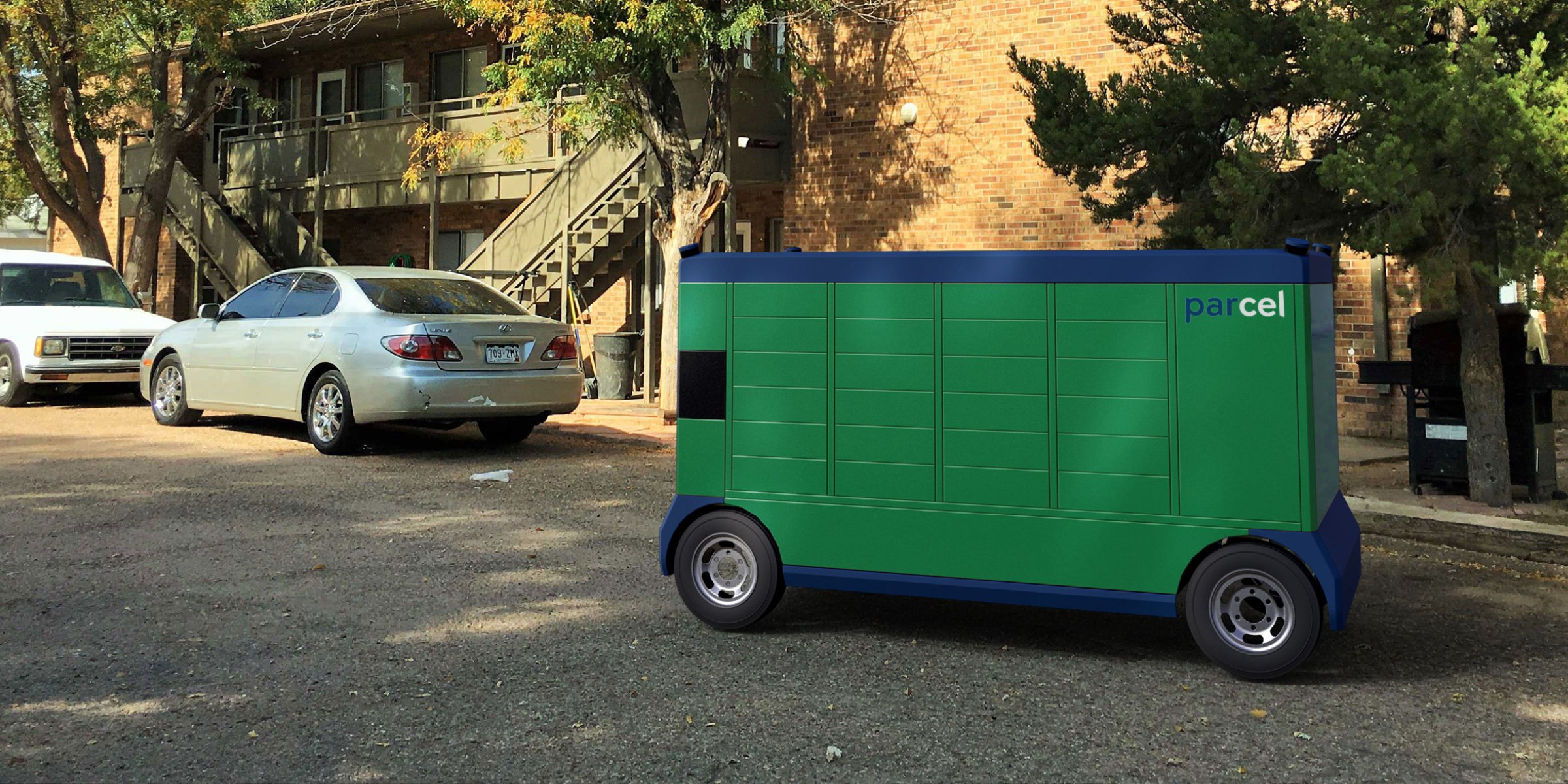


A cutaway for a later proposed package sorting system, utilizing existing vehicle frameworks with custom interior frameworks
Ideation & Development Round 3 - Distribution Centers
Distribution centers had always been part of Boxbot's plan, but by this round their role had inverted. The vehicles that once drove the design conversation became secondary to the sorting and automation infrastructure they fed into — the real efficiency gains lived in how packages moved through the center, not in the vehicle carrying the last few blocks.
Design work shifted accordingly, toward larger, more capable distribution centers built around automated sorting.

A proposed larger distribution center
The Throughline
Three rounds in, the center of gravity had moved: what started as "design a vehicle people trust" ended as "design the infrastructure that makes the vehicle the last step in a bigger picture."
Each round didn't replace the one before it so much as reveal what the previous round had been missing. The pedestrian vehicle taught the project what capacity constraints looked like, the NEV taught it what the hub actually needed to support, and by the third round the hub itself had become the real product. That's less a straight line than a series of corrections, each one earned by building the thing before it.