
ARCIMOTO Electric Vehicles
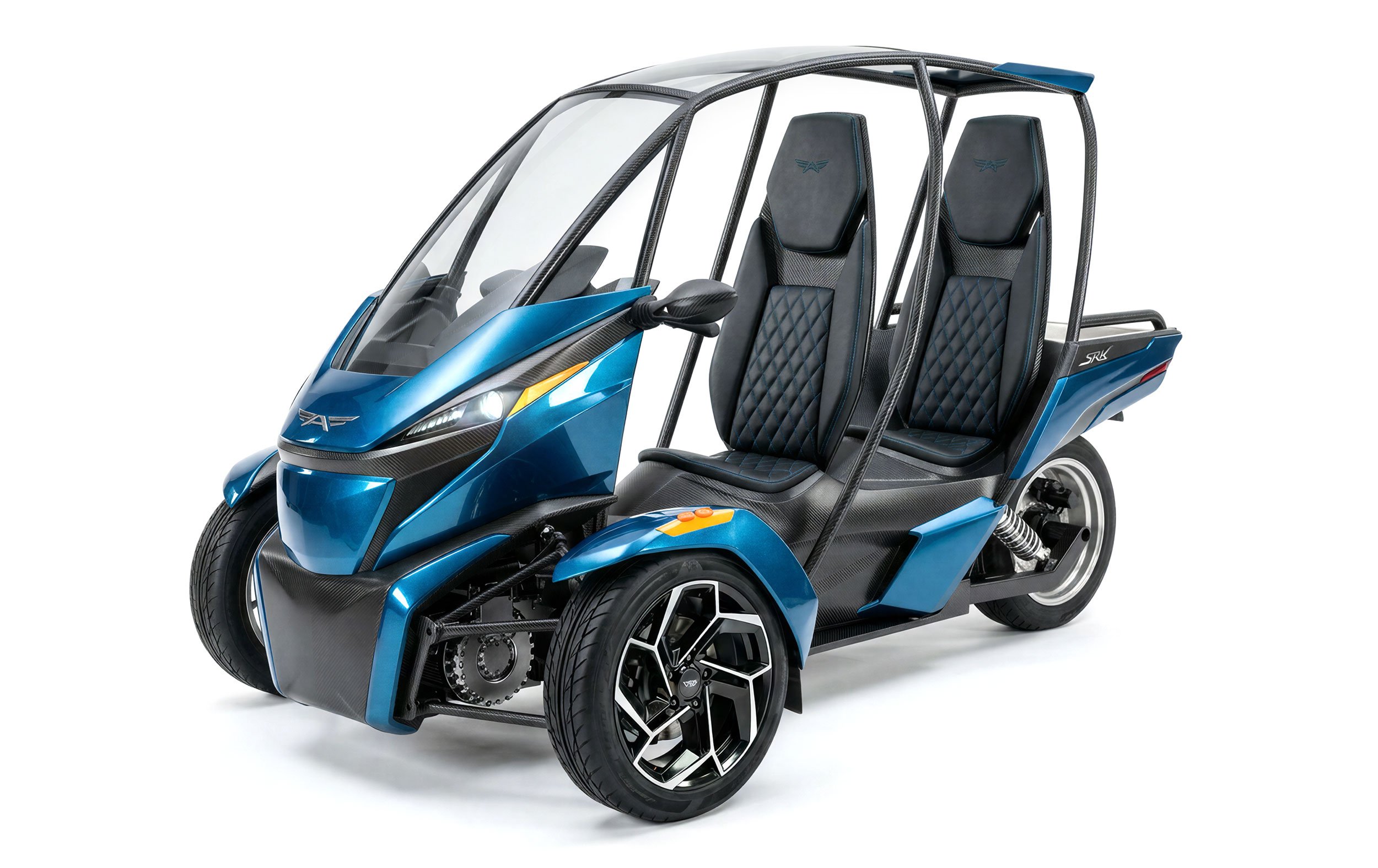
CONCEPT ART, COMPONENT LAYOUT, 3D MODELS, RENDERINGS
Disciplines: Industrial Design, Interaction Design
Role: Industrial Designer, Senior Industrial Designer
Skills & Tools: Sketching, Photoshop, Class A Surfacing, Rhinoceros, Solidworks, Keyshot
Arcimoto set out to sell the public on a vehicle with a wheel missing. Over six generations, the brief itself kept changing shape: seat count, body coverage, control scheme, even which discipline drove which. The exterior design, identity, and ergonomics work fell to me every time. This case study traces that arc. Not one design, but a design practice that had to keep re-proving itself against a moving target.
Problem/Opportunity
A three-wheeled, non-car vehicle format has no existing visual language to borrow from. Every generation had to earn public acceptance from scratch.
Nearly every generation reset a fundamental constraint (seat count, body coverage, control input, chassis footprint), so this was rarely "iterate." It was "redesign around a new problem".
Engineering and manufacturing realities repeatedly overrode work that was otherwise complete, including a fully finished exterior and well-progressed interior.
Goal
Design a vehicle people could grow to be proud to drive, not just tolerate, despite an unfamiliar wheel count and layout
Translate a different engineering mandate every generation, including passenger count, panel coverage, motorcycle-inspired open-air layout, and control scheme, into one coherent, evolving identity
Build design infrastructure (ergonomics models, frame-surface workflows, dashboard systems) durable enough to survive being handed off between generations and, at times, between designers
Move fluidly between authoring the vehicle's structure and designing onto structure someone else had already fixed
Impact
The lineage shipped. Arcimoto began retail production and delivery of the FUV, delivering two-person, three-wheeled electric vehicles to its first customers and listed on NASDAQ under the ticker FUV and carrying thousands of customer pre-orders before the company later shut down production amid funding and scaling problems unrelated to the product's design.
Design work carried through multiple prototype and production-track generations, across three major product pivots, ultimately directly informing Arcimoto's production vehicle.
A dedicated ergonomics wireframe, built once and maintained across four generations, kept the cabin experience consistent even as the exterior identity around it kept evolving.
Act One: Proving the Category Can Exist
Starting Point: Three Wheels, One Seat, No Precedent (Gen3)
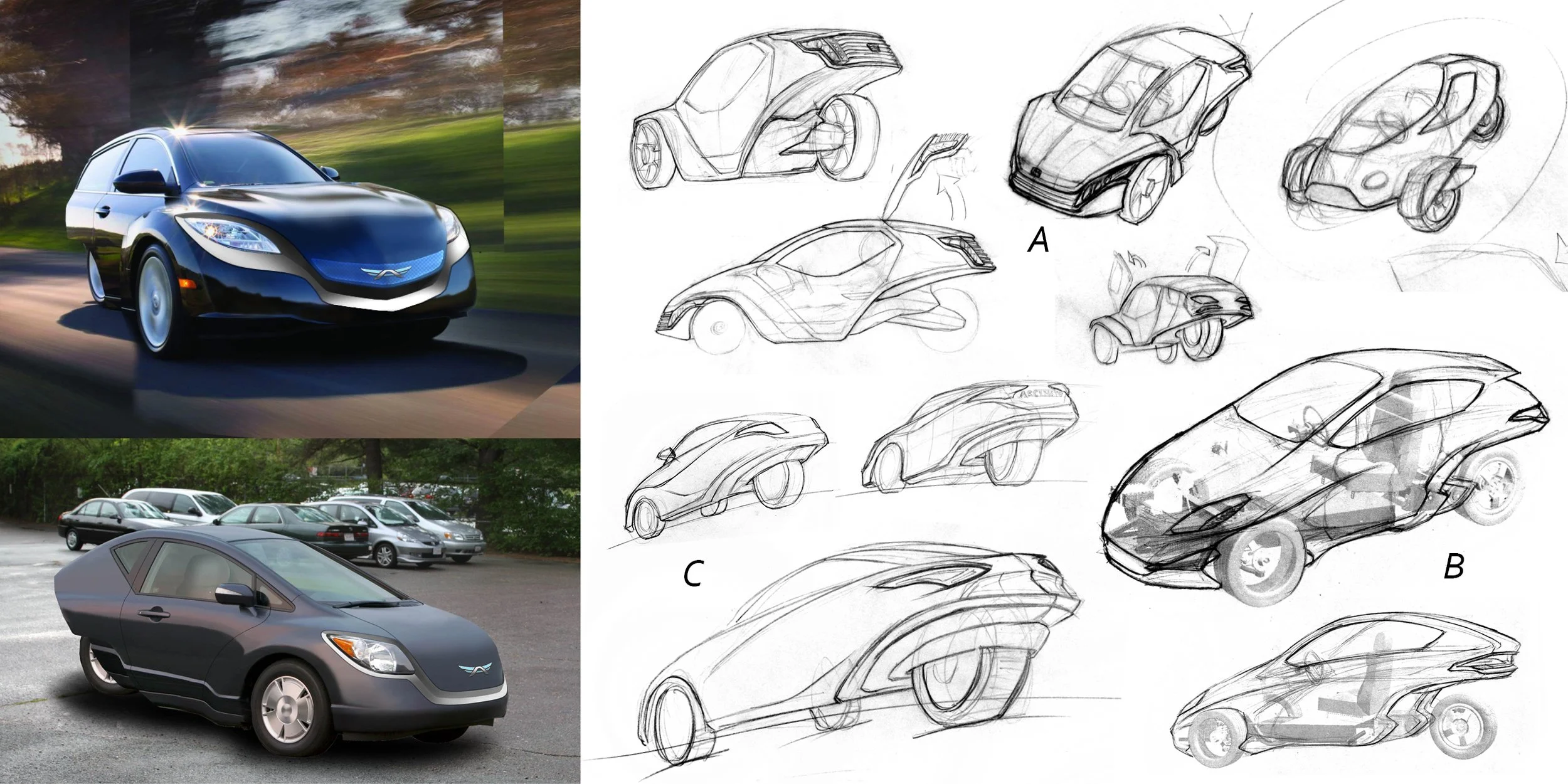
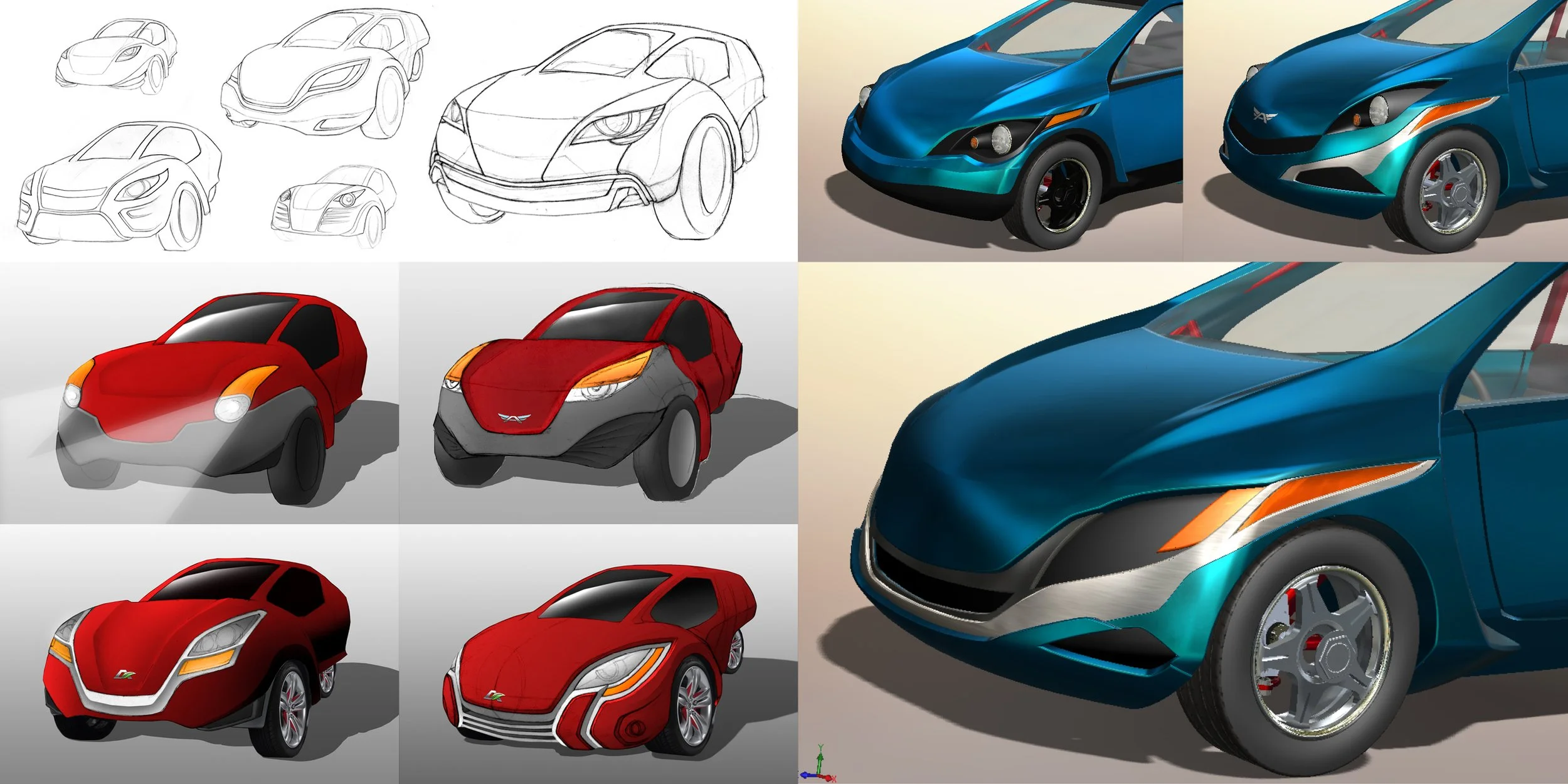
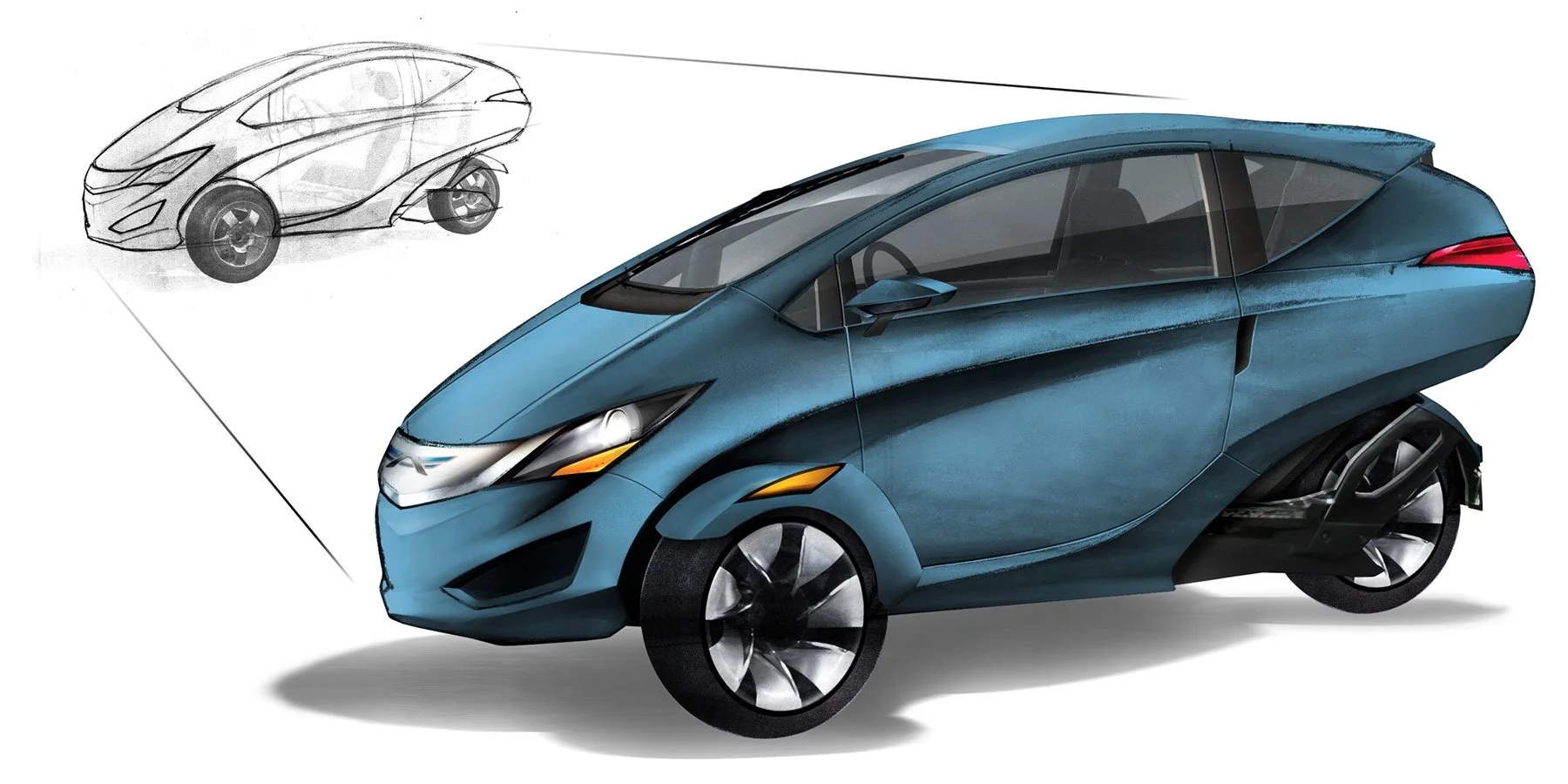
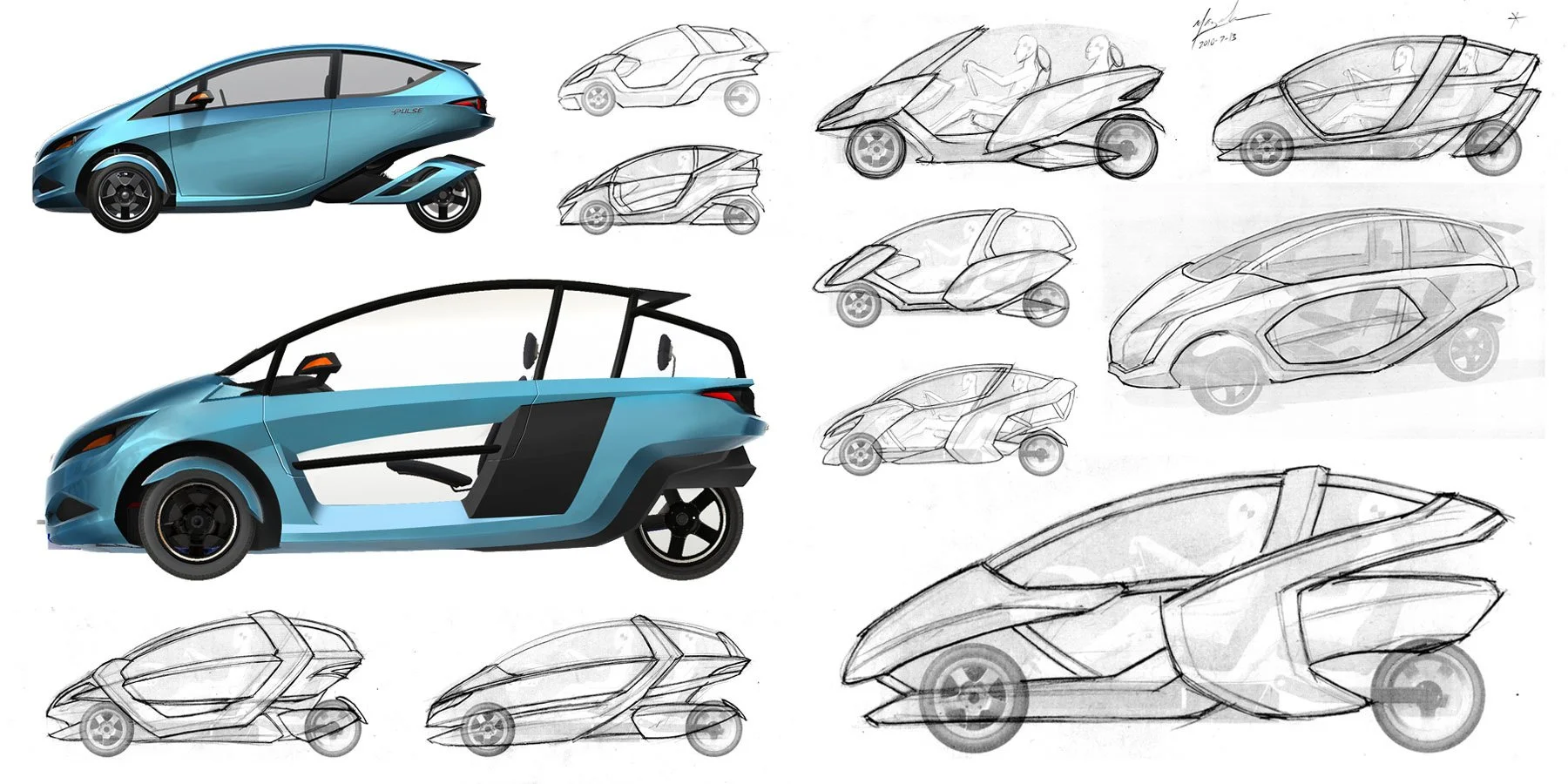
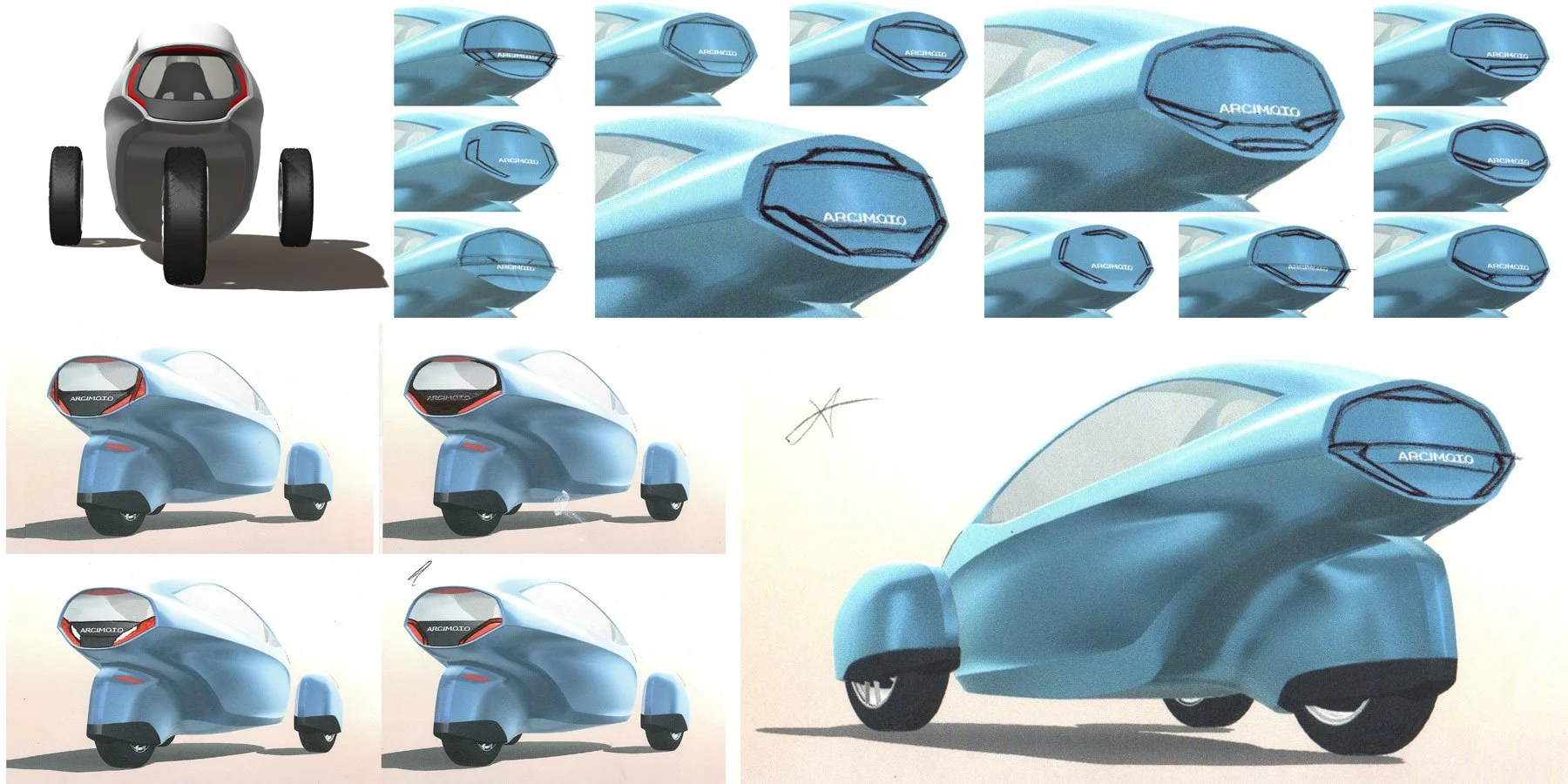
The brief for Gen3 was blunt: three wheels instead of four, single-seat occupancy, full body panels. As Industrial Design Lead on the first prototype to carry a complete exterior aesthetic, the job wasn't styling a car with a wheel removed. It was inventing a visual grammar people would accept in its place. Early sketches leaned on a full-width front end specifically to soften the shock of an unfamiliar silhouette.
Early sketches kept a full-width front end specifically to preserve a familiar "car" silhouette. A covered rear wheel and swing-arm hid unsightly mechanical elements while adding visual mass and a greater sense of stability.
Testing the Waters (Initial Pulse Public Reveal)
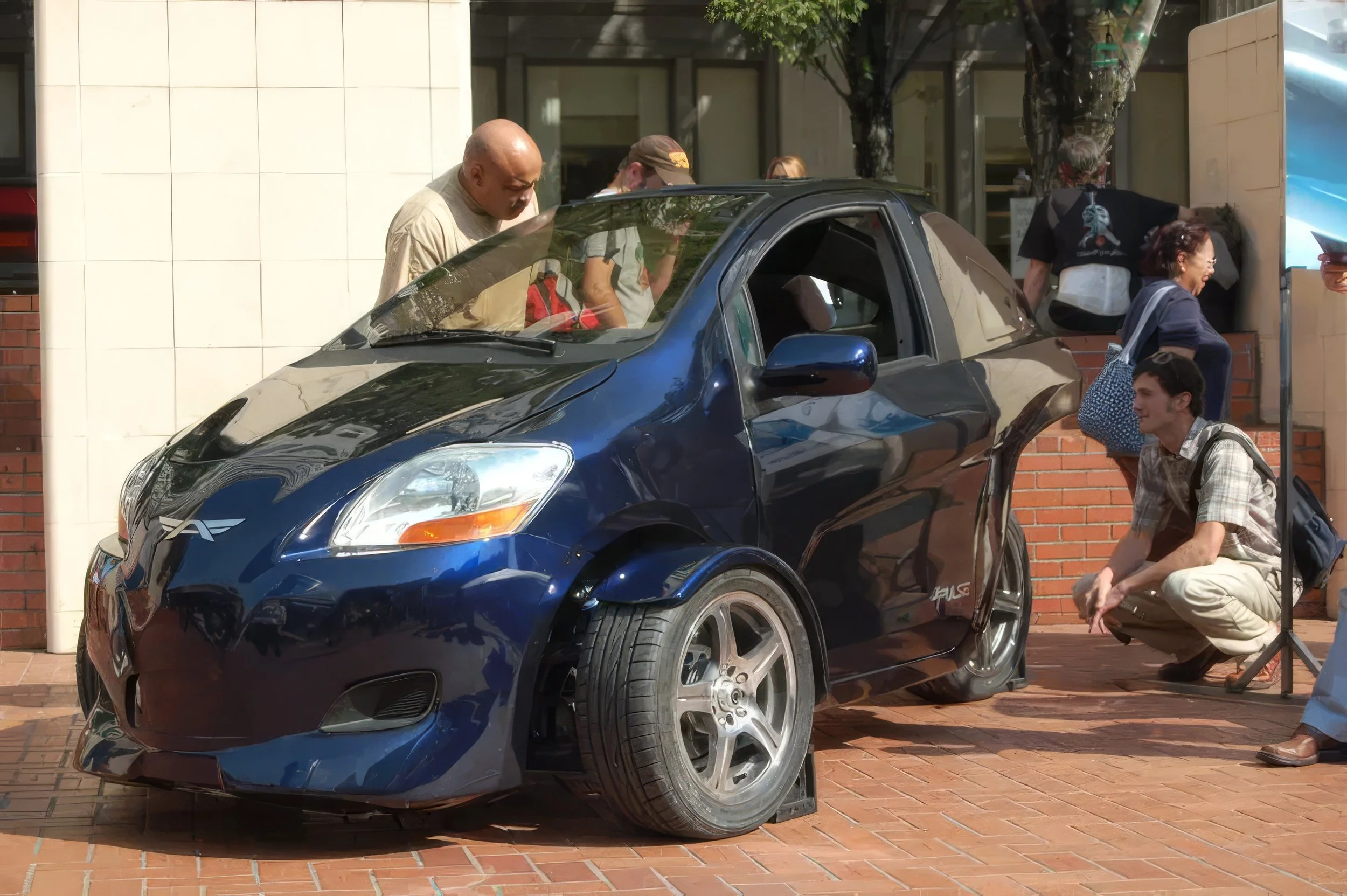
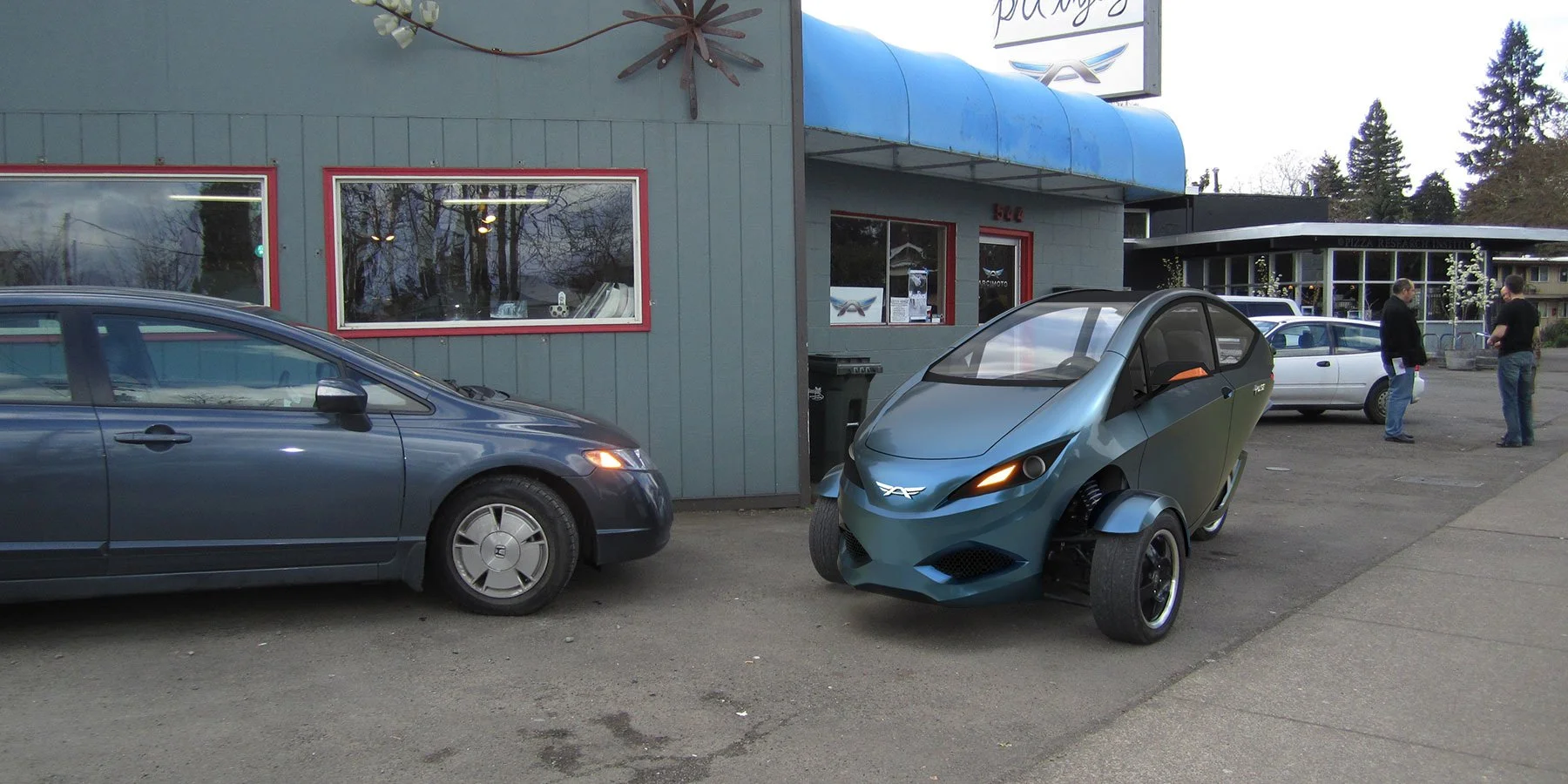
Before committing to the expense of taking an inhouse exterior concept to production, the company opted to construct a 3-wheeled vehicle, with the culmination of mechanical engineering developed during Gen3 as the bones, and an exterior built from existing vehicle panels. This vehicle, the first to bear the moniker Pulse, was the core of Arcimoto’s first public reveal at a launch event in downtown Portland that drew press coverage, local officials, and a crowd of onlookers seeing the company's vehicle in person for the first time.
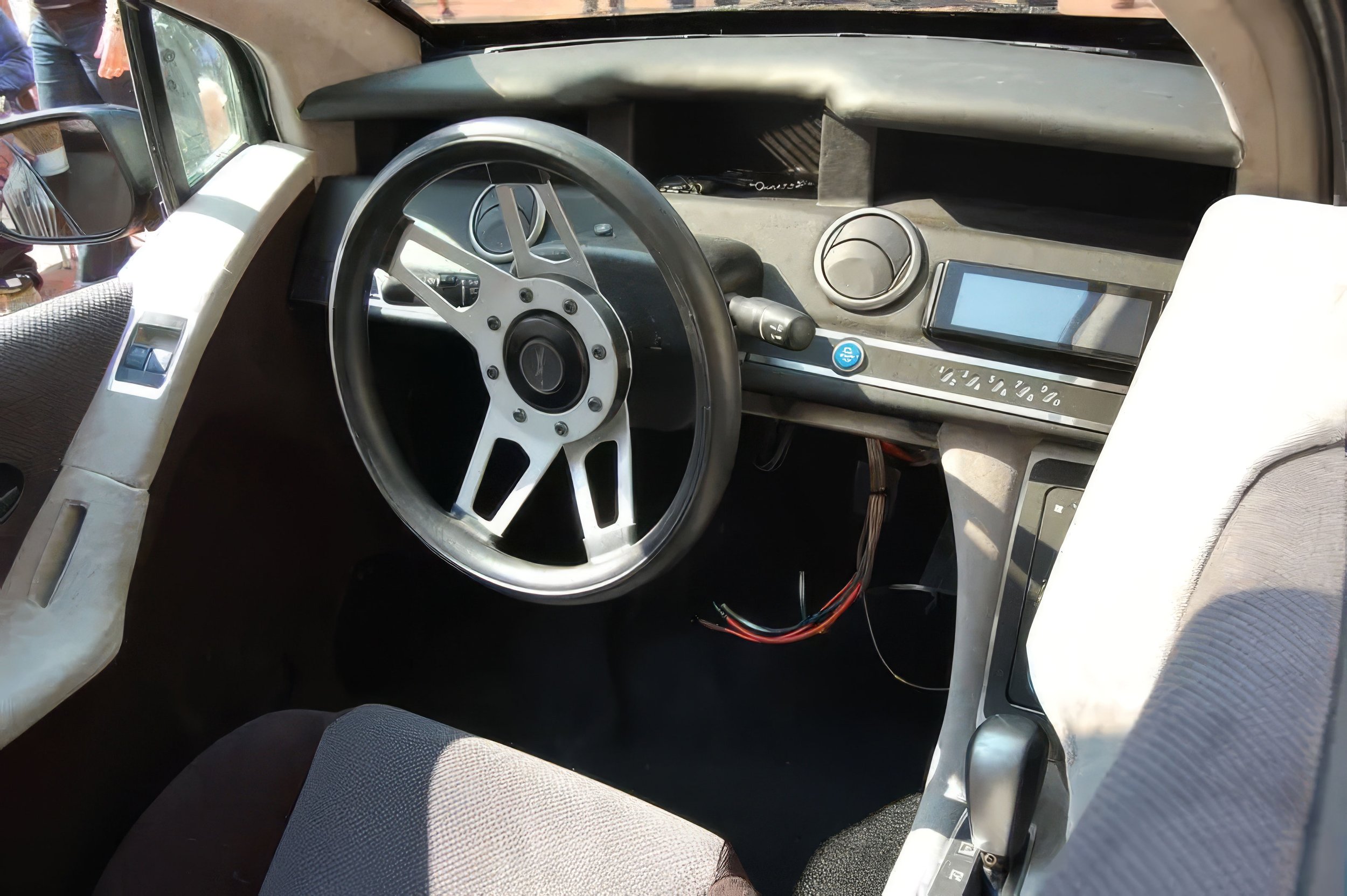
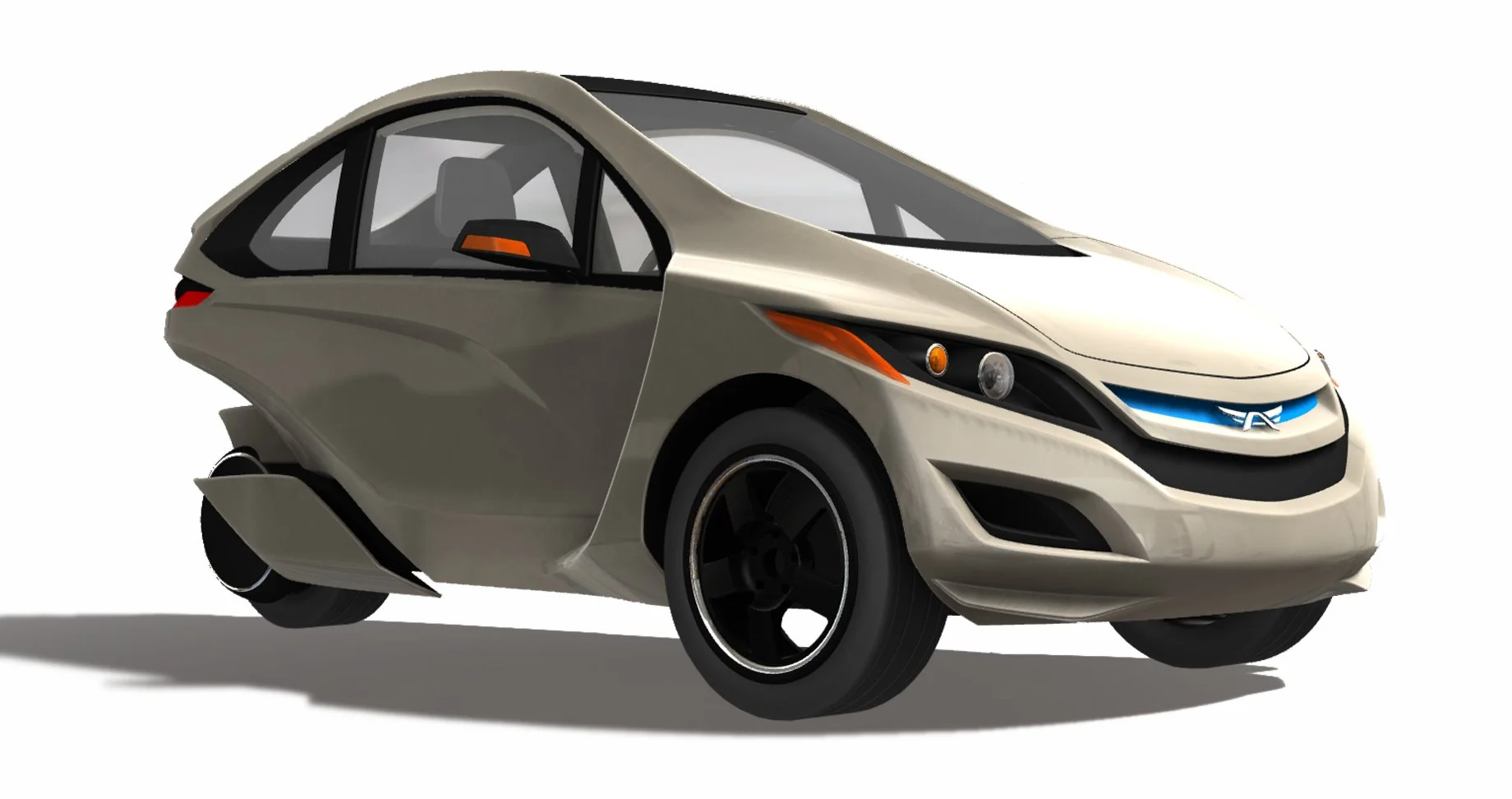
The team finalized a fully original exterior concept, made real progress on the interior, and shipped none of it, because leadership decided the product needed a second seat before body panels ever reached production.
The First Pivot: A New Shape for the Same Mission (Gen4)
Gen4, the Pulse, threw out single occupancy for tandem seating: driver and passenger in a line, not side by side. As the engineering team built a new chassis around a new battery layout, the vehicle grew both longer and taller, and the full-width nose gave way to a thinner one matched to the new body surface, with “Indy racer-style” exposed front wheels.
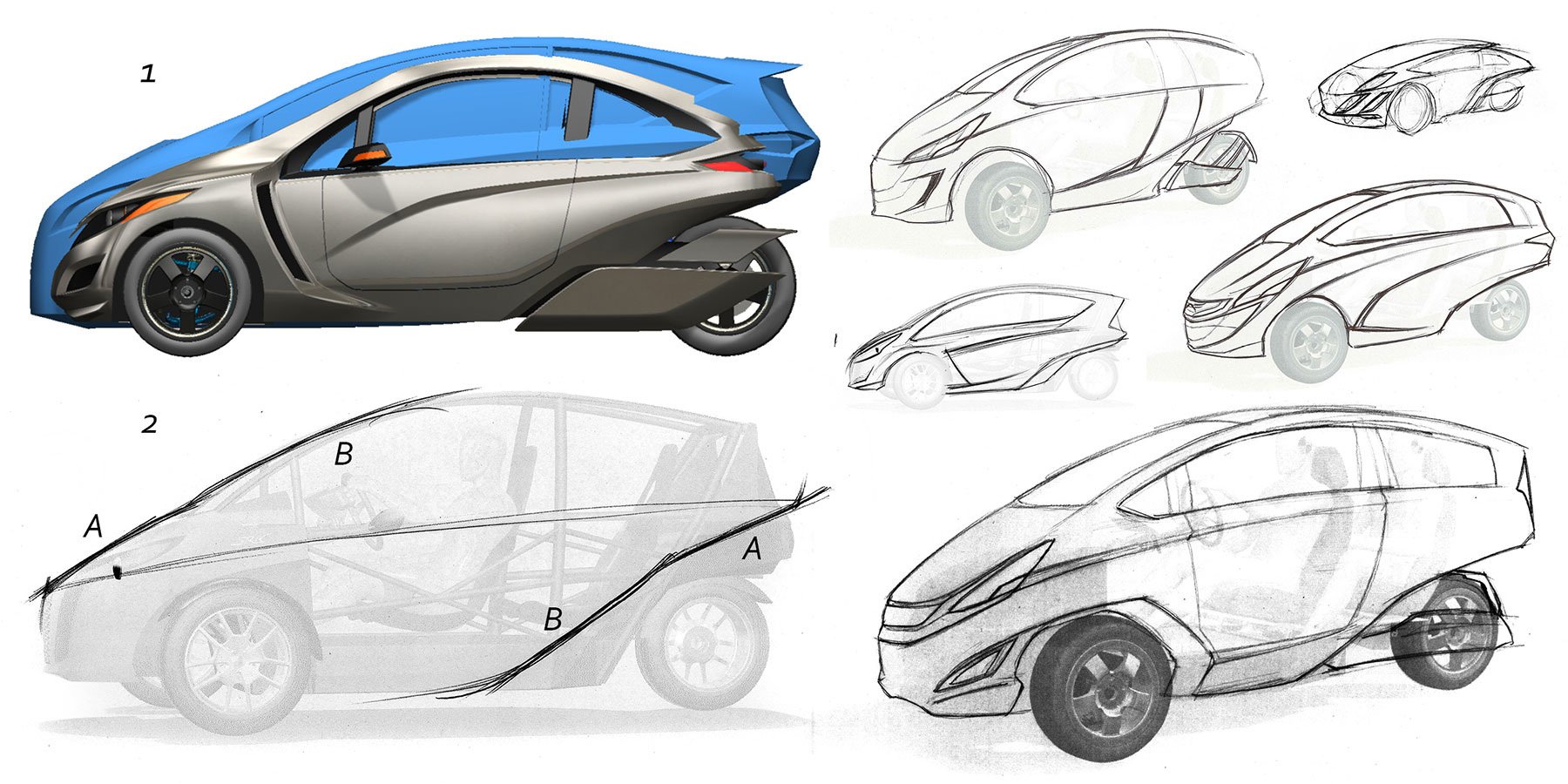
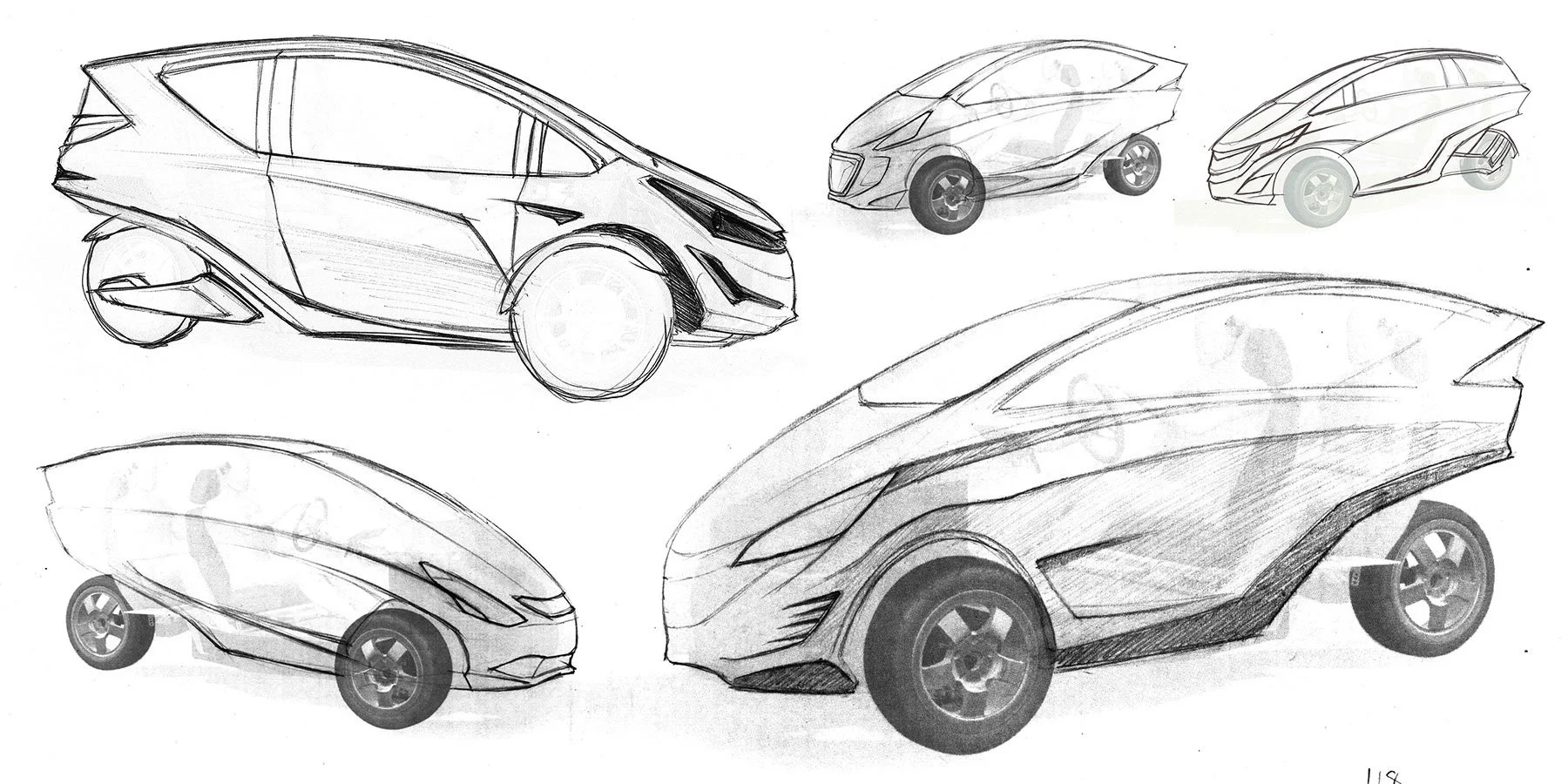
The Ergonomics Wireframe
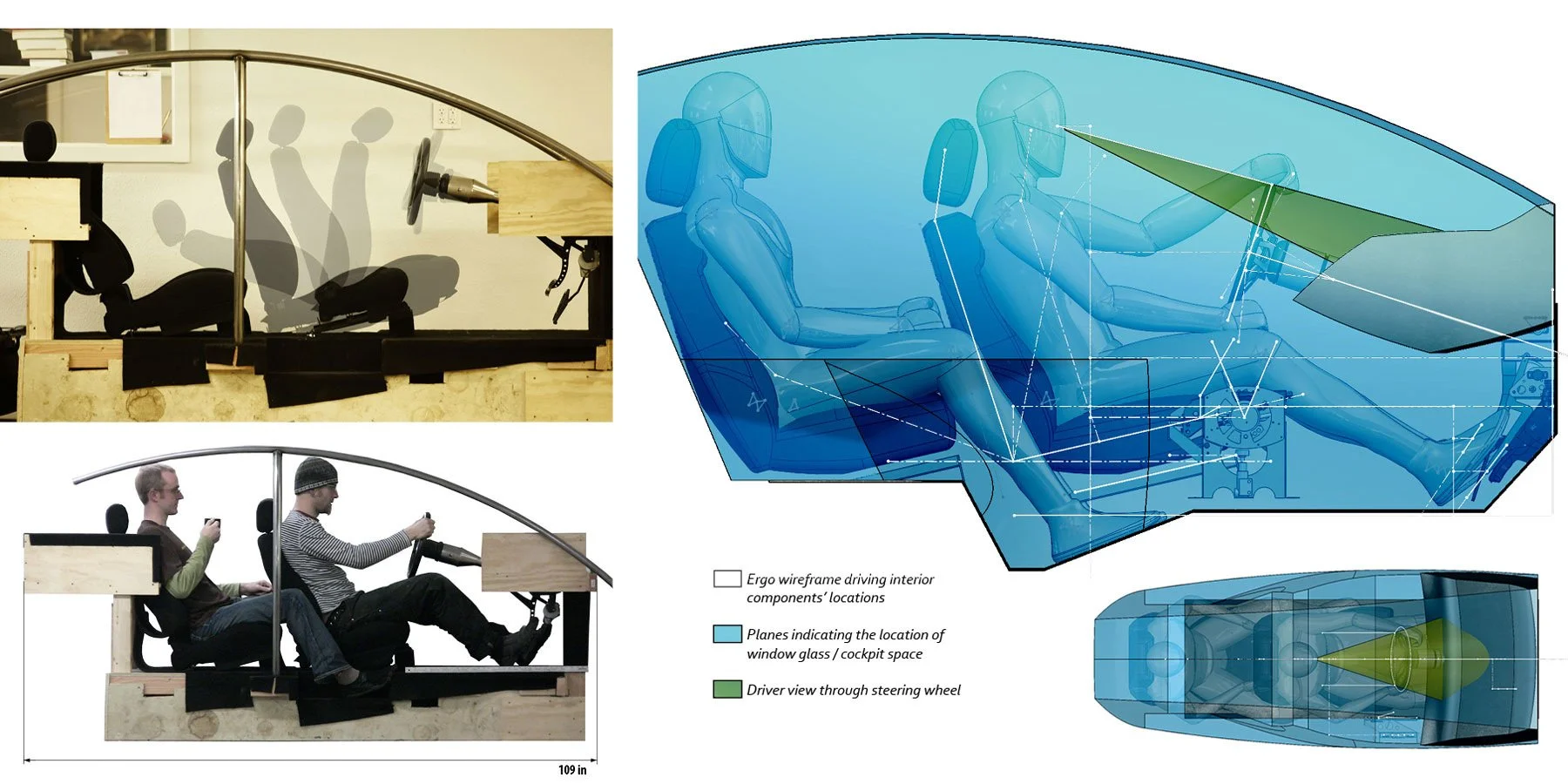
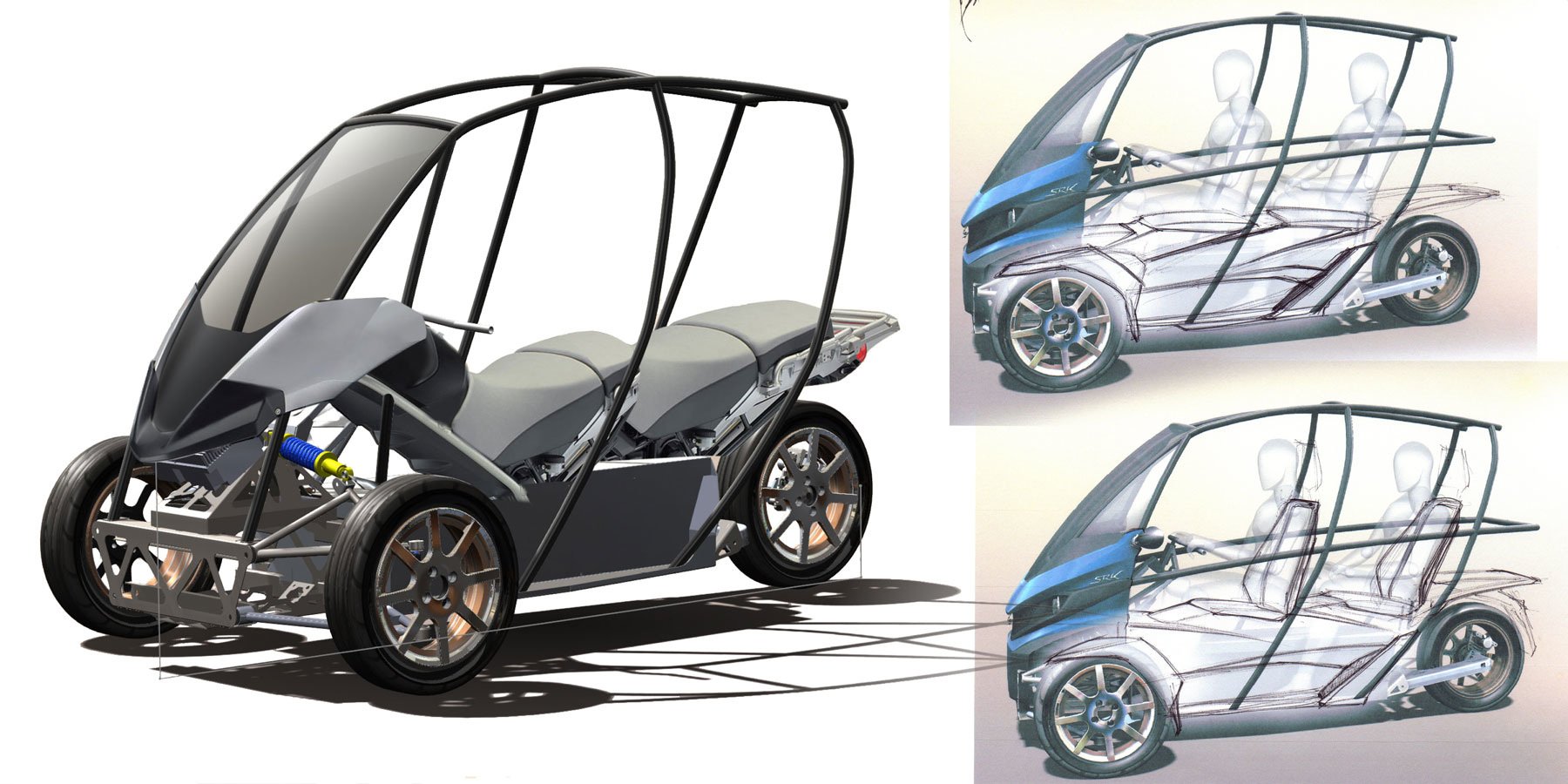
The tandem layout introduced ergonomic problems with no precedent to copy, such as where do a rear passenger's legs and knees go on a vehicle this narrow? To solve the tandem-seating puzzle, a detailed 3D ergonomics wireframe was built to govern seat, steering wheel, and parking-brake placement relative to real human proportions.
That wireframe didn't retire with Gen4. It was carried forward and maintained through Gen7, quietly doing the ergonomic groundwork for four vehicles that otherwise looked only superficially alike. It's a small detail, but it's the first sign the job was shifting from drawing a shape to building infrastructure other designs could stand on.
Cozying up to Engineering
Body panel development happened directly in Solidworks, an engineering tool rather than a surfacing one, to keep frame and body files in sync with the team without lossy file conversion. In this way, I became intimately familiar with the main tool being utilized across disciplines within the team.
Additionally, across all generations, Arcimoto's mechanical engineers and I worked together to make sure the master body surface and underlying frame stayed in alignment. That partnership held constant for years. What changed, generation to generation, was how much direct say I had over the frame itself. This version of the frame, “Proto 4,” was the first to feature metal tubing in an arrangement, supervised and at times constructed by myself, that contoured to the body style designed to dress it. Proto 4 consequently has a more finalized look than previous frames, even without body panels.
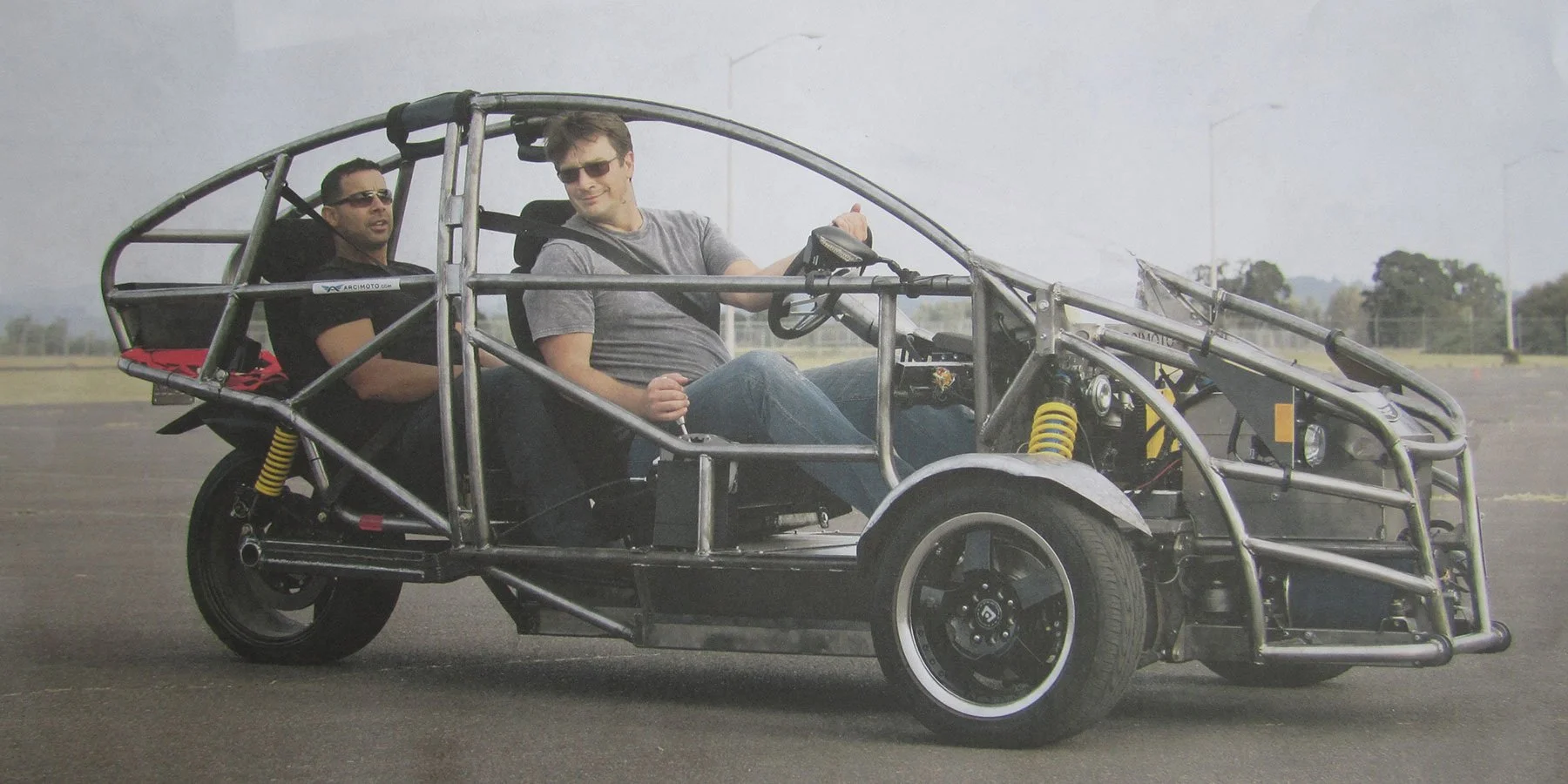
ABOVE LEFT: A doctored action shot of the Pulse in its latest official stage of completion, ghosted to reveal the interior layout and frame. Firefly cast member Nathan Fillion and Castle costar Jon Huertas show off the concept’s tandem seating arrangement.
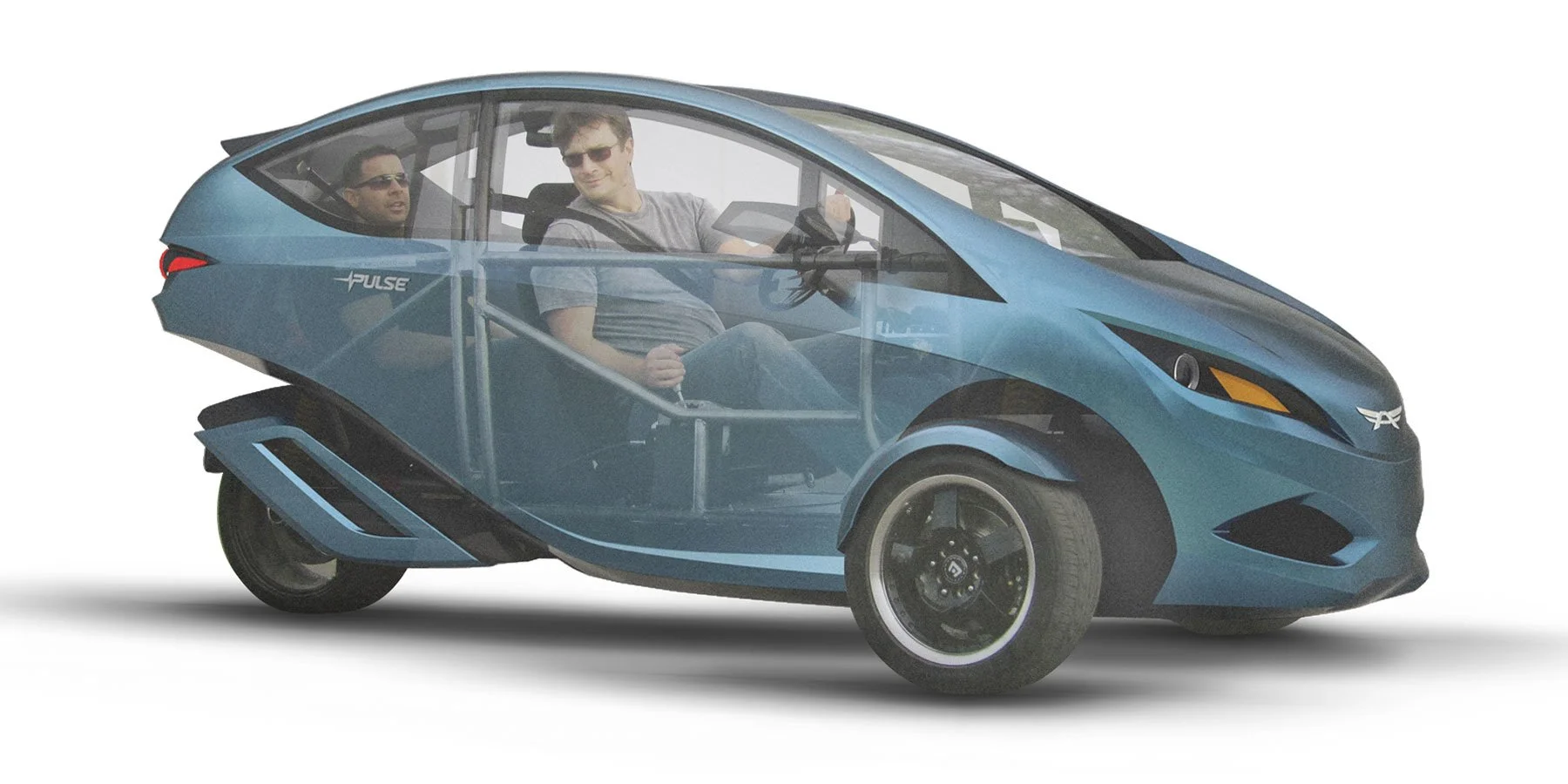
By the end of Gen4, two vehicle directions had come and gone without a shared body line between them. What carried forward wasn't a shape at all — it was the ergonomics wireframe, quietly doing the same job under three different skins. The work that survived wasn't the styling, it was the infrastructure underneath it.
Act Two: Defining a Category of Its Own
Pivot Two: The Body Comes Off (Gen5)
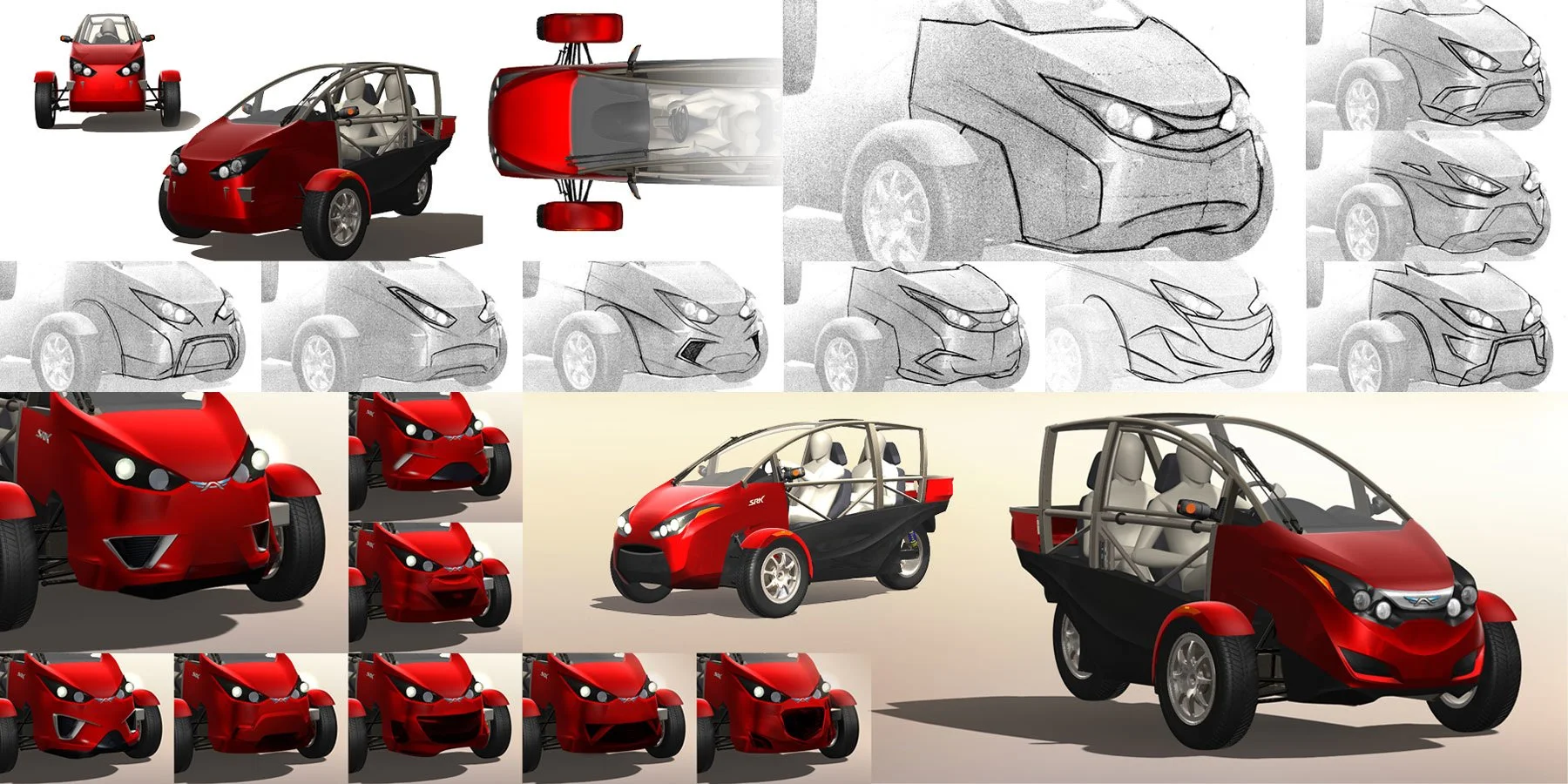
Gen5 marked Arcimoto's real pivot away from chasing a "car minus a wheel." Full body panels, the constraint that had defined Gen3 and Gen4, were dropped in favor of an open-air layout with exposed frame, cutting material cost and weight while giving the vehicle a more visceral, motorcycle-like connection to the road. Additionally, a senior industrial designer was brought on board to provide much-needed wisdom and guidance, becoming my mentor and the department lead.
Now called the SRK, based on a comment Nathan Fillion made about its ‘shark-like’ driving experience, the vehicle stopped trying to be a small car and started building its own category.
Modularity as a Selling Point
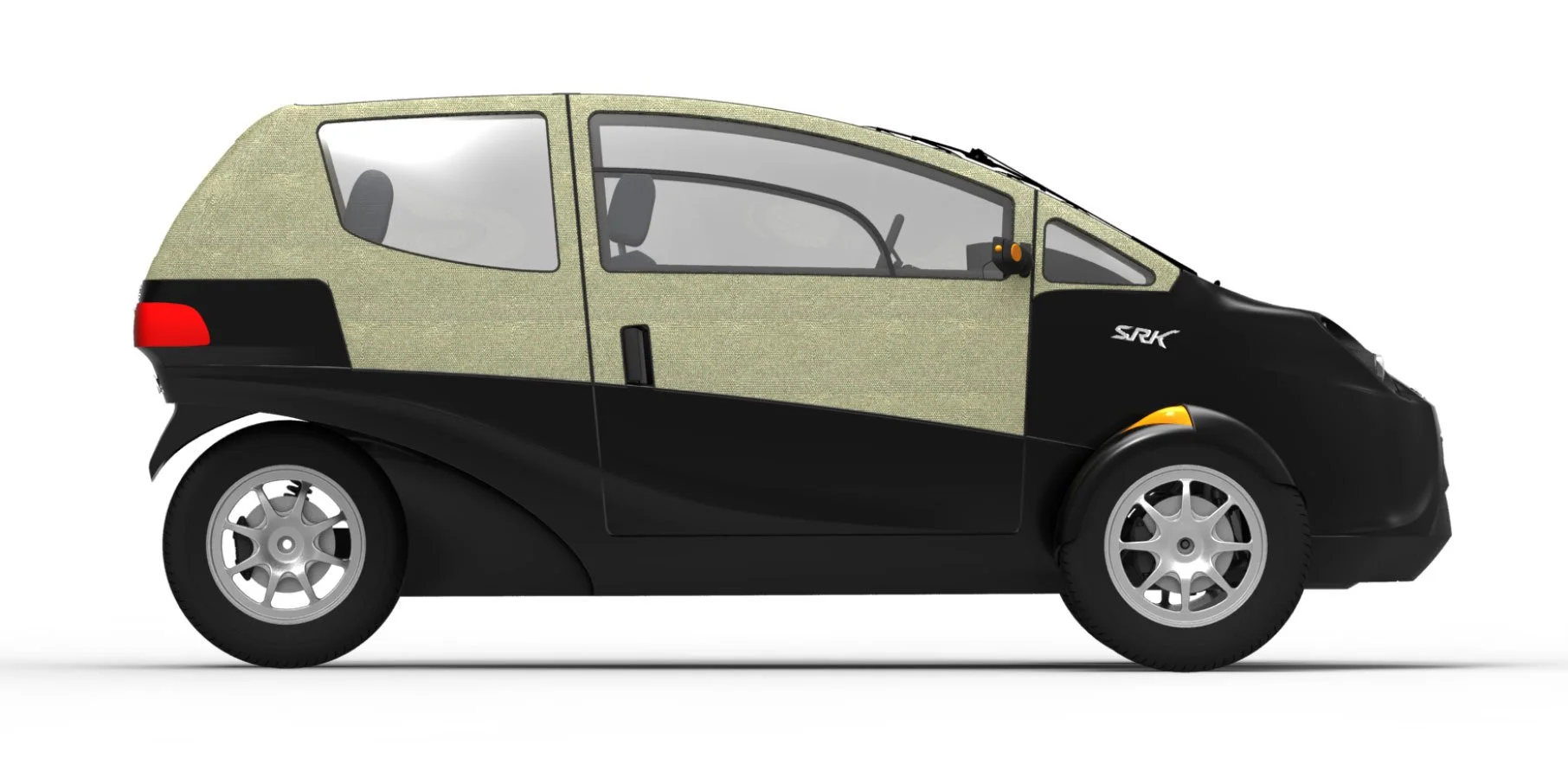
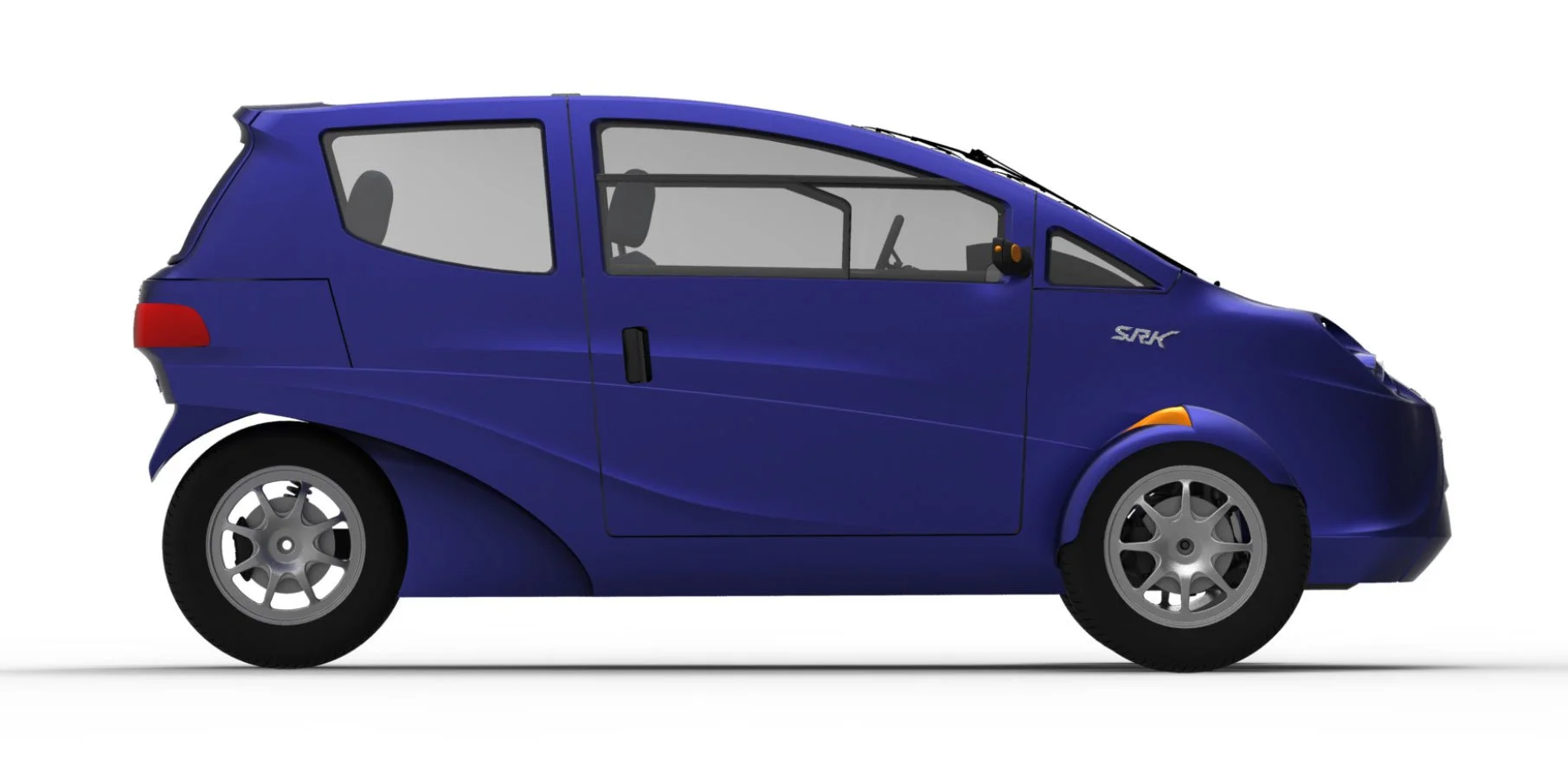
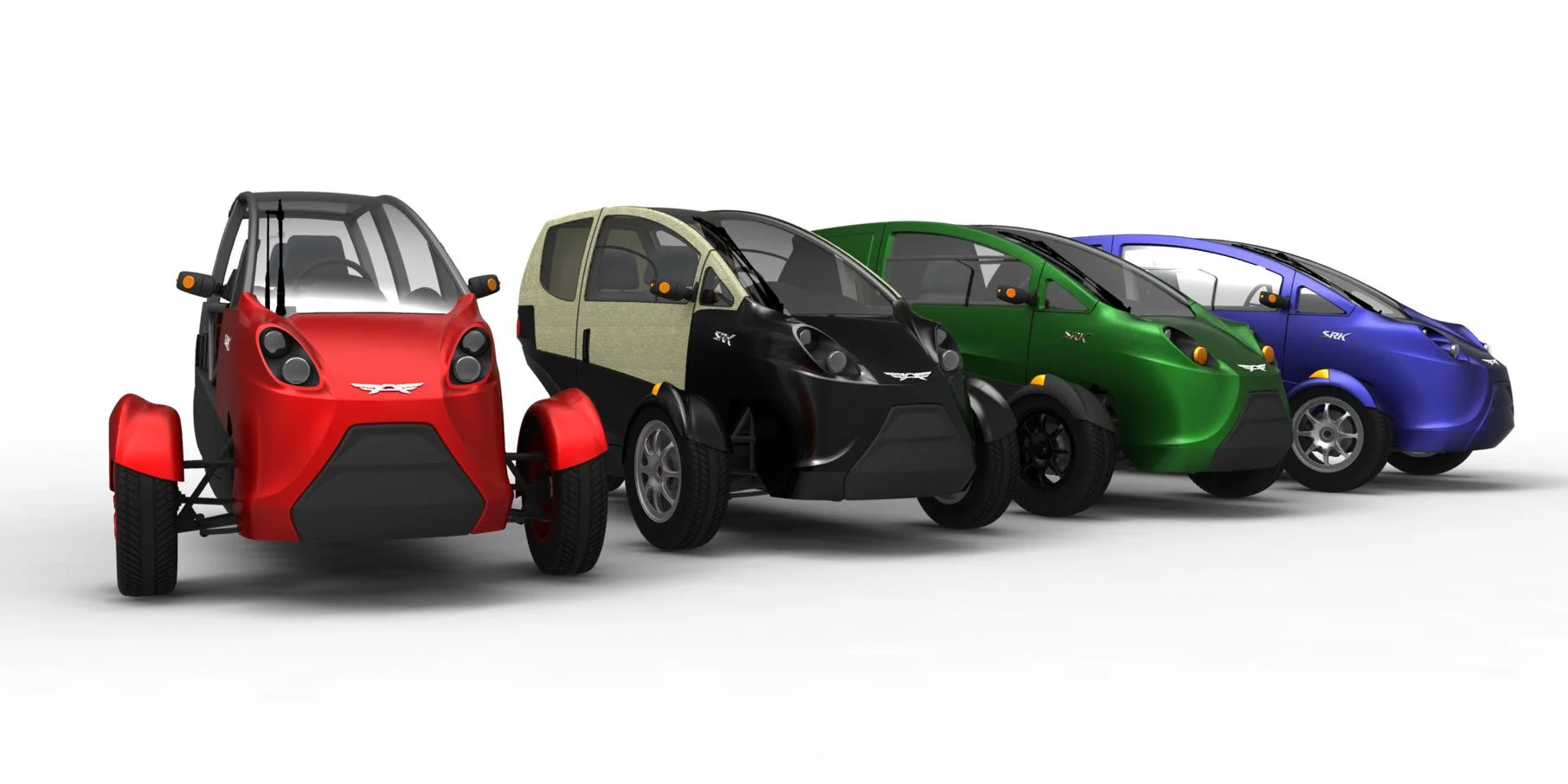
Dropping full enclosure didn't mean abandoning it entirely. Gen5 was conceived as open-air by default, with canvas and hard-shell TPO enclosures offered as add-on options for buyers who wanted more weather protection than exposed frame allowed. The decision that had looked like subtraction was really modularity: one platform, three different relationships to the elements. It meant the visual language built around exposed frame had to hold up whether or not a customer ever added a panel back on.
Evolving the Motorsport Voice (Gen6)
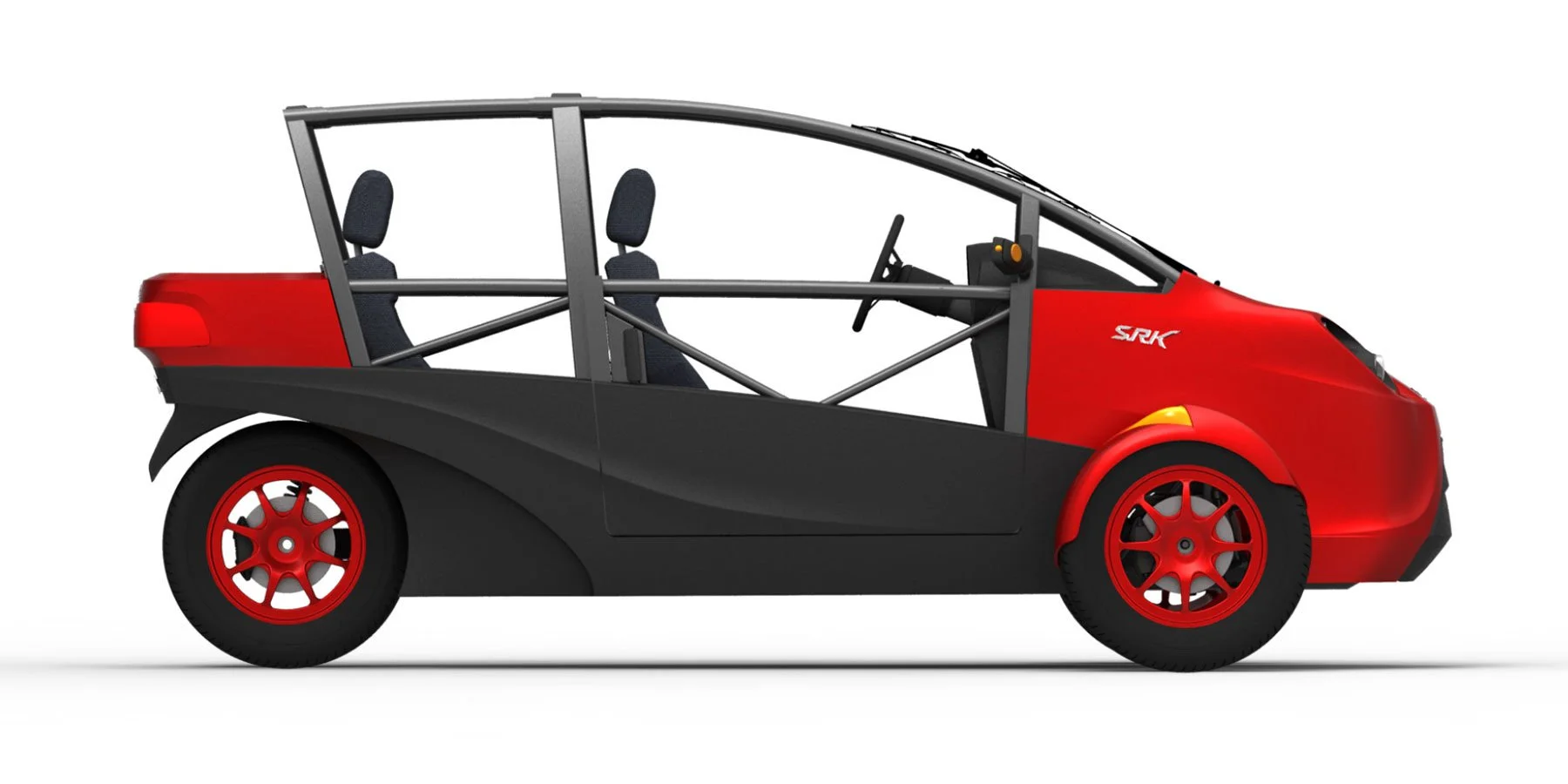
Our senior industrial designer parted ways with the company at this stage, and I was reinstated as the main decision-maker. Top of mind for Gen6 was to make sure the vehicle earned its shark-inspired moniker by maximizing the driver’s visceral connection to the road, akin to that experienced when driving a motorcycle.
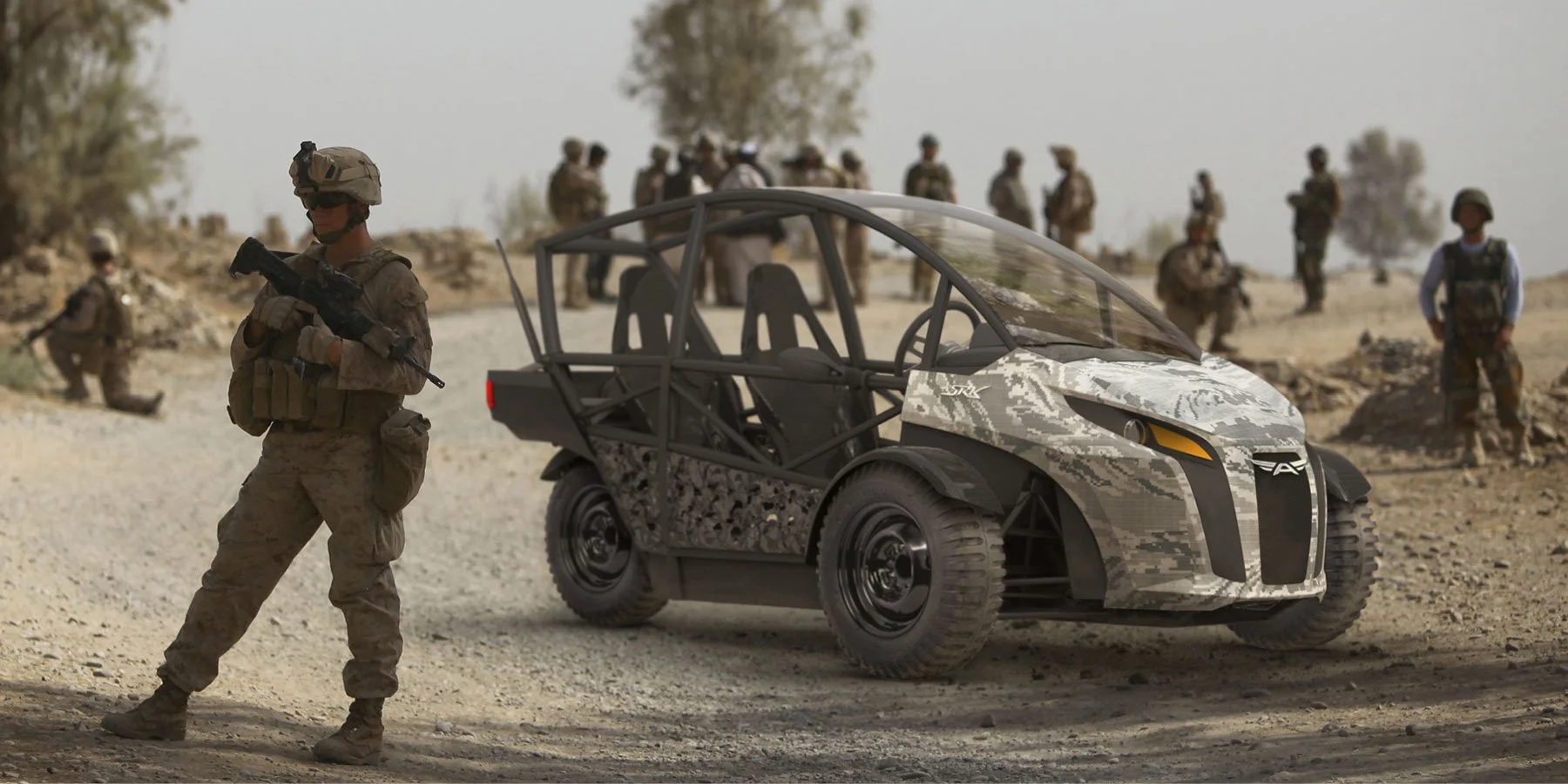
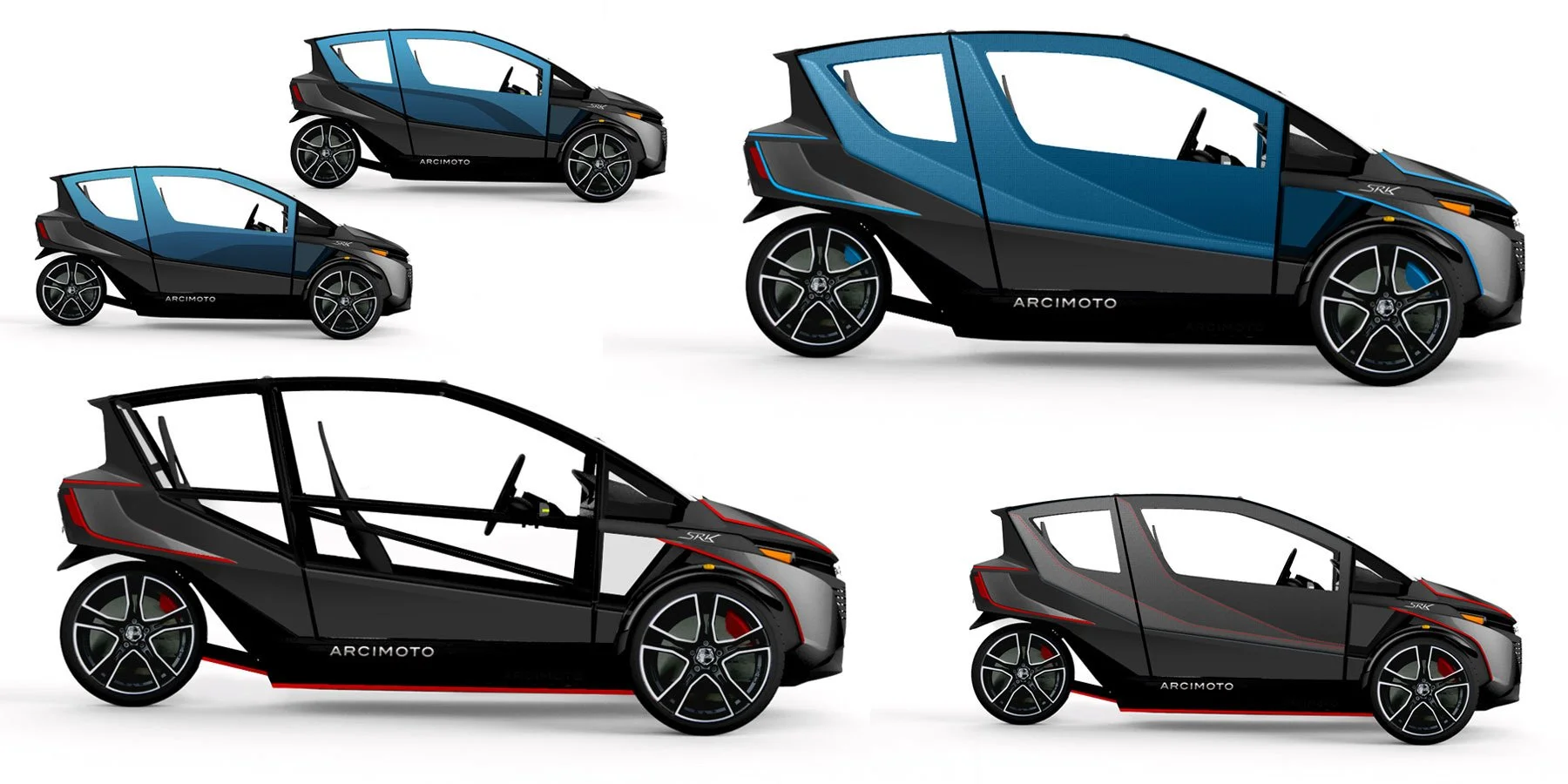
Accordingly a major push was made to save on material costs and reduce vehicle weight during this iteration, and the body paneling was reduced to a front end identity and rear ‘tailbox’, with side panels as optional upgrades. A military-affiliated version was explored — a peak ahead at the situational adaptability that would be developed as a key product differentiator down the road.
Finalizing the SRK (Gen7)
With the platform efficiency maximized, Gen7 was conceived as the final product that would distill everything Arcimoto had learned so far, allowing slightly more body panel coverage towards the rear of the vehicle in the name of visual appeal.
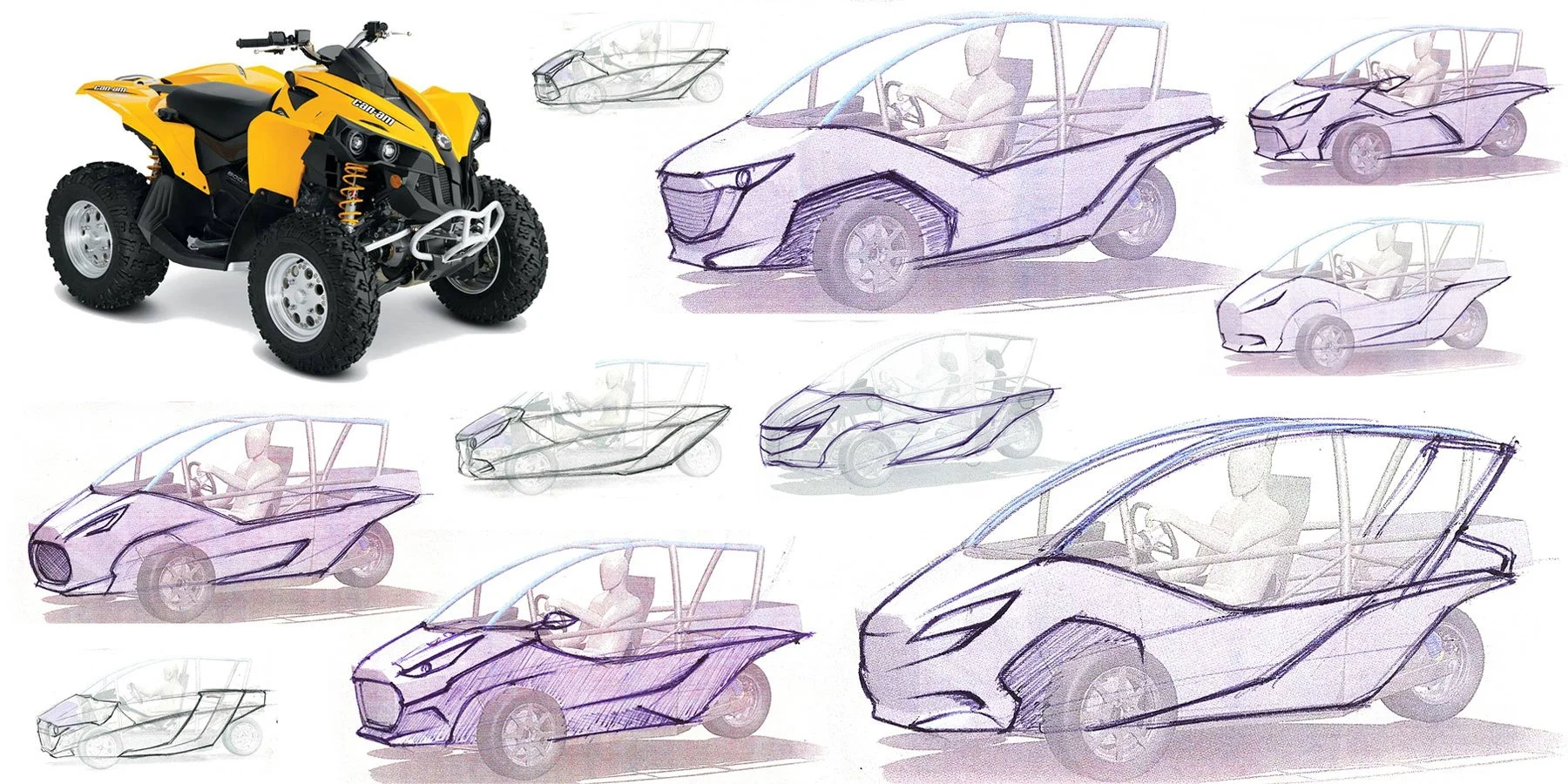
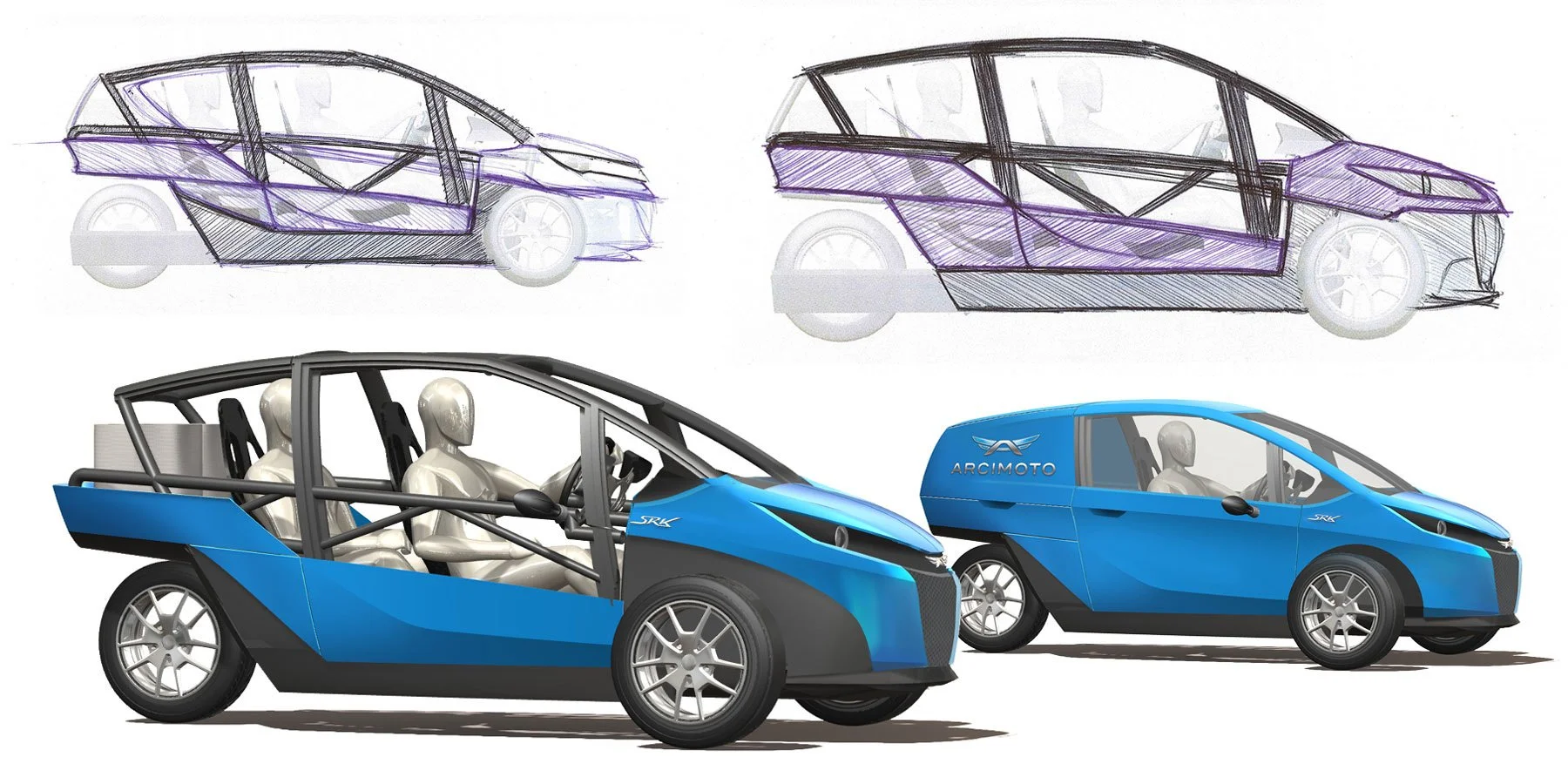
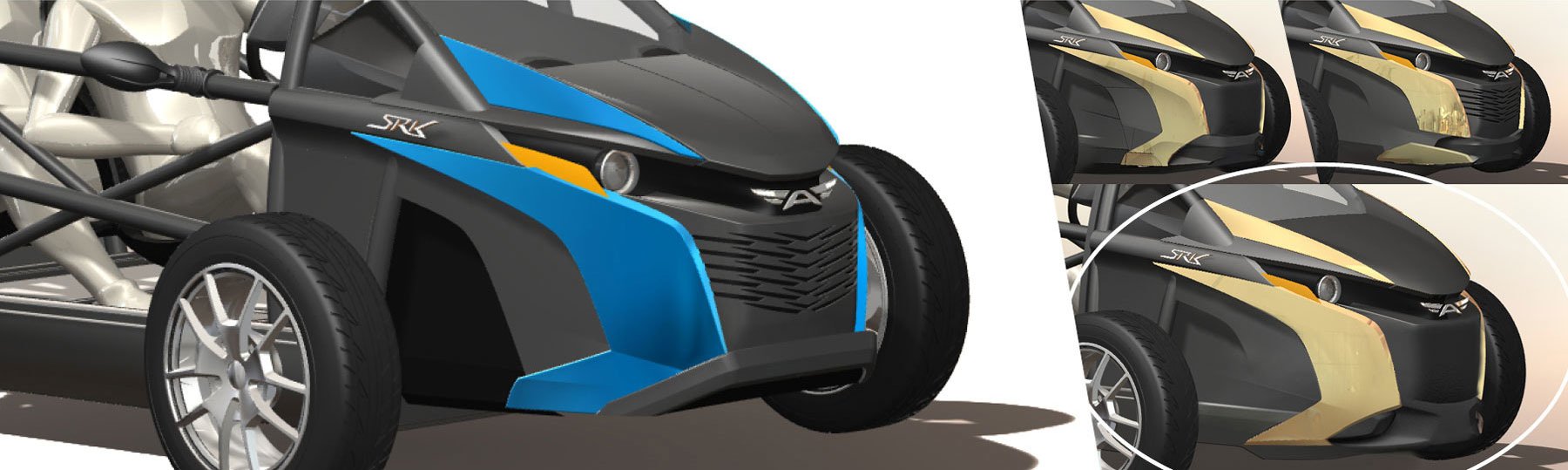
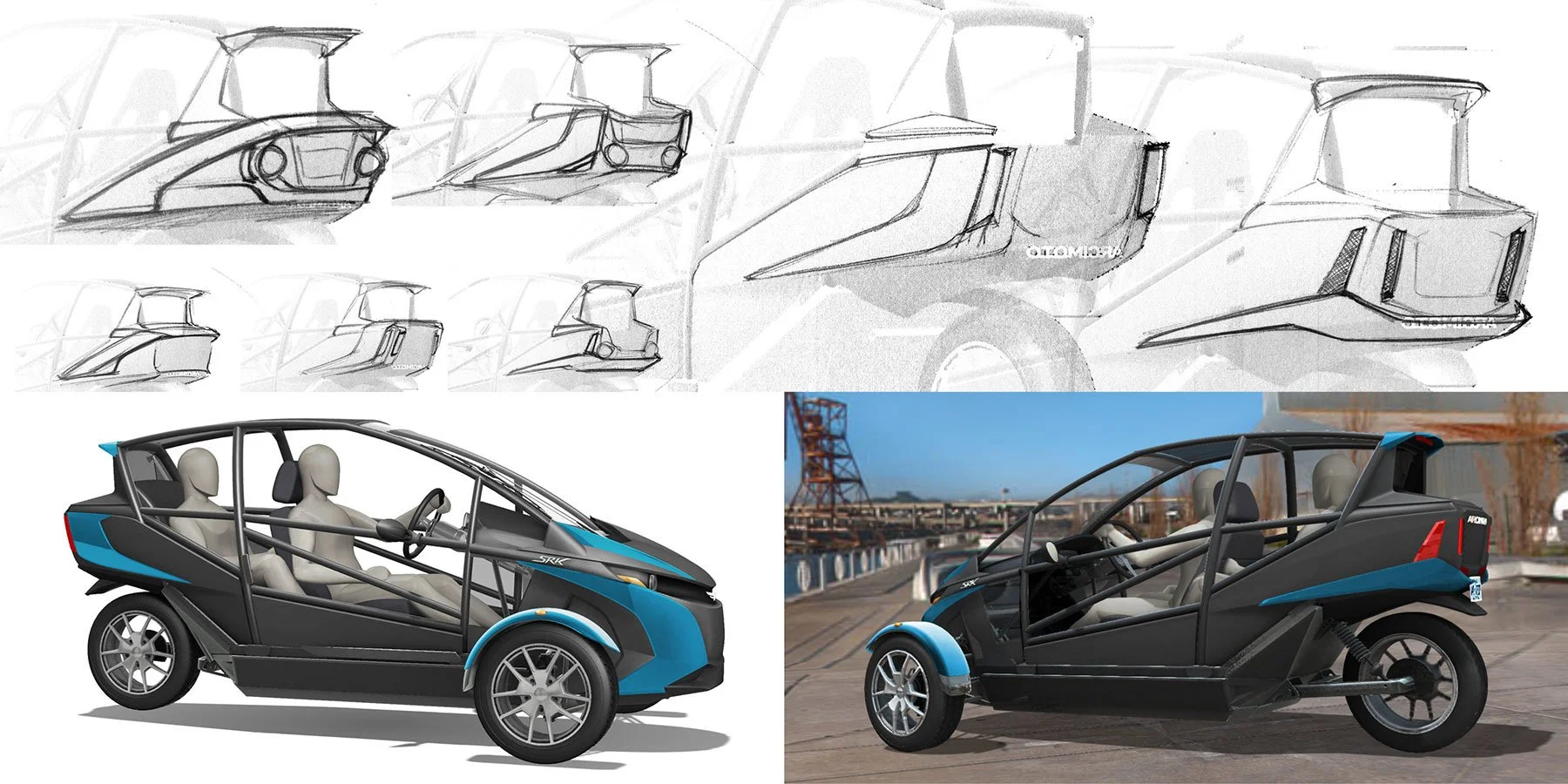
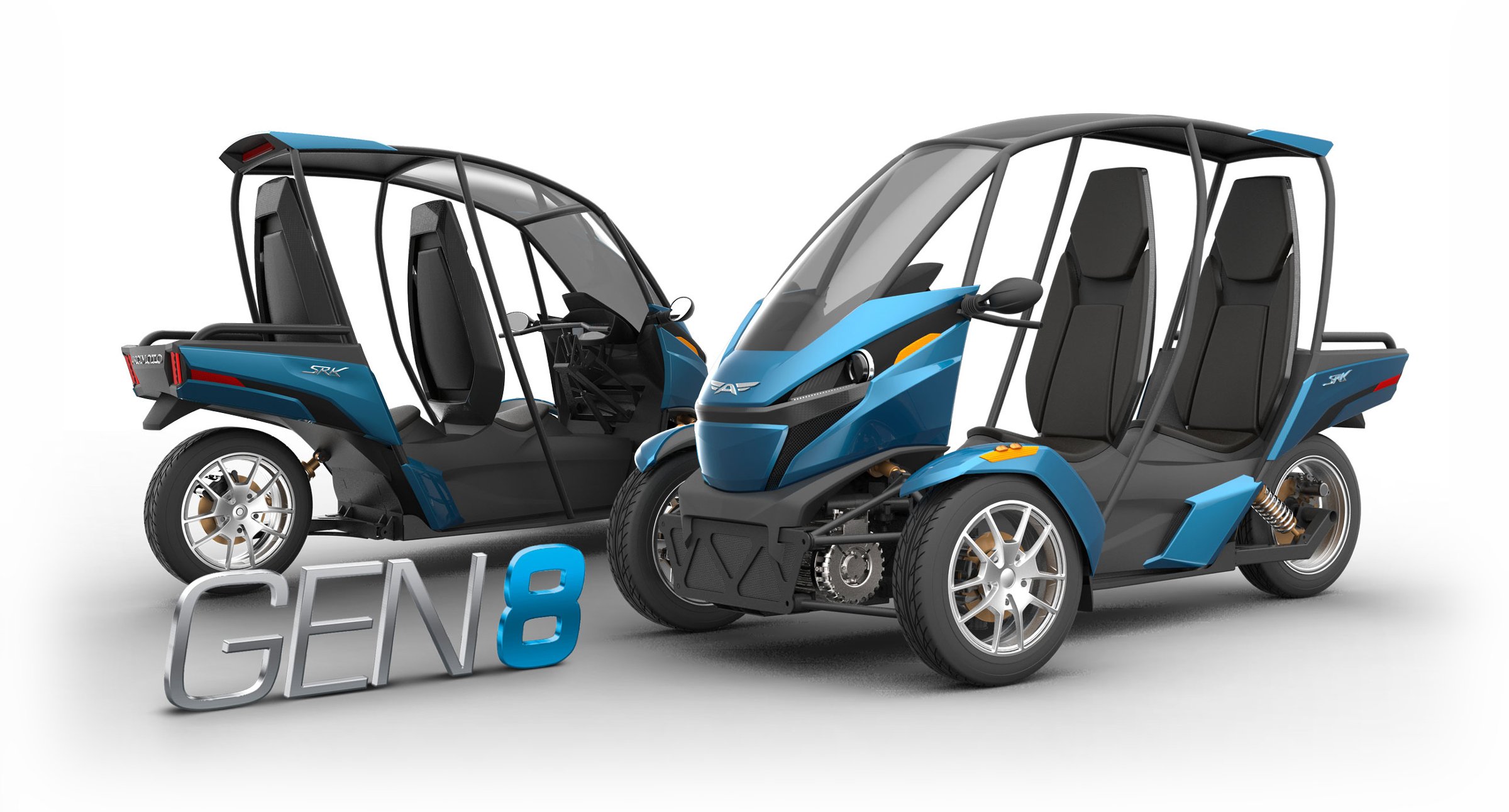
I was determined to lean Gen7 harder into the new motorsport-inspired direction first established in Gen5, pulling visual cues from ATVs and offroad vehicles — exposed frames, splash-color accents — instead of conventional automotive styling. Sketches, 3D models and photomanipulations experimented with different levels of body panel coverage. A roofline kink was added so the vehicle didn't read as too "bubbly," with the added benefit of further reducing the height of the vehicle.
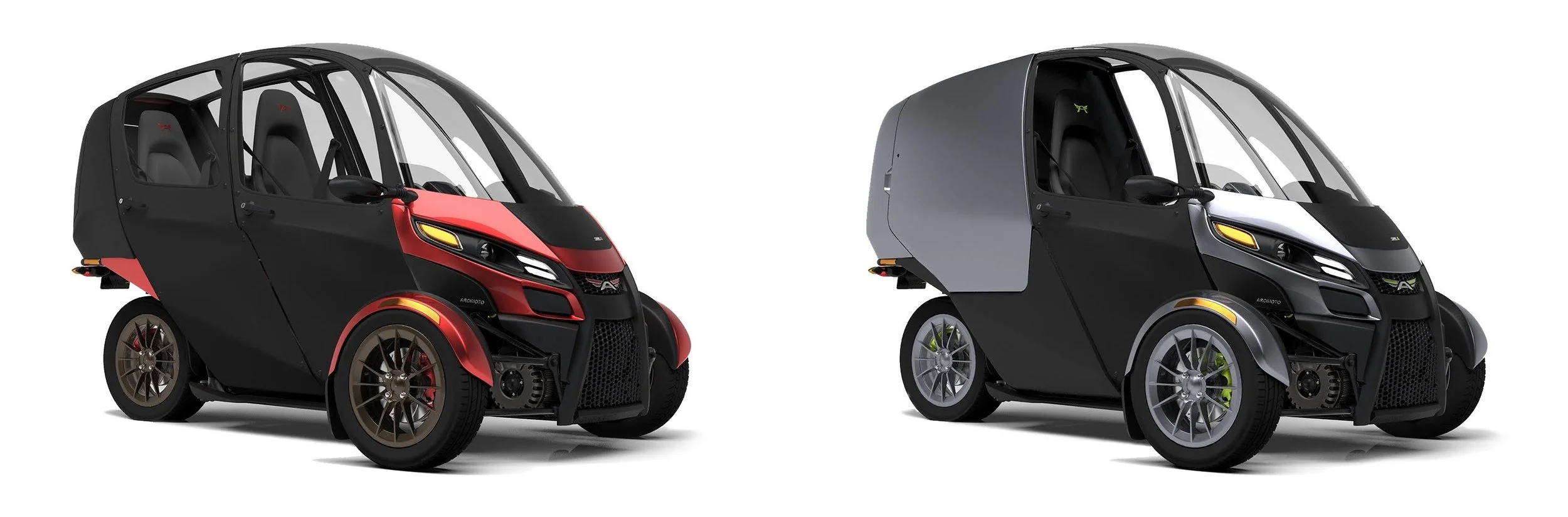
Some of these concepts aimed to cover the different vehicle variants (fully-enclosed, 'deliverator' or delivery vehicle, and open-air) with body paneling that would interconnect, in the interest of lessening the number of variant-specific parts that would need to be produced.
When the Body Built the Frame
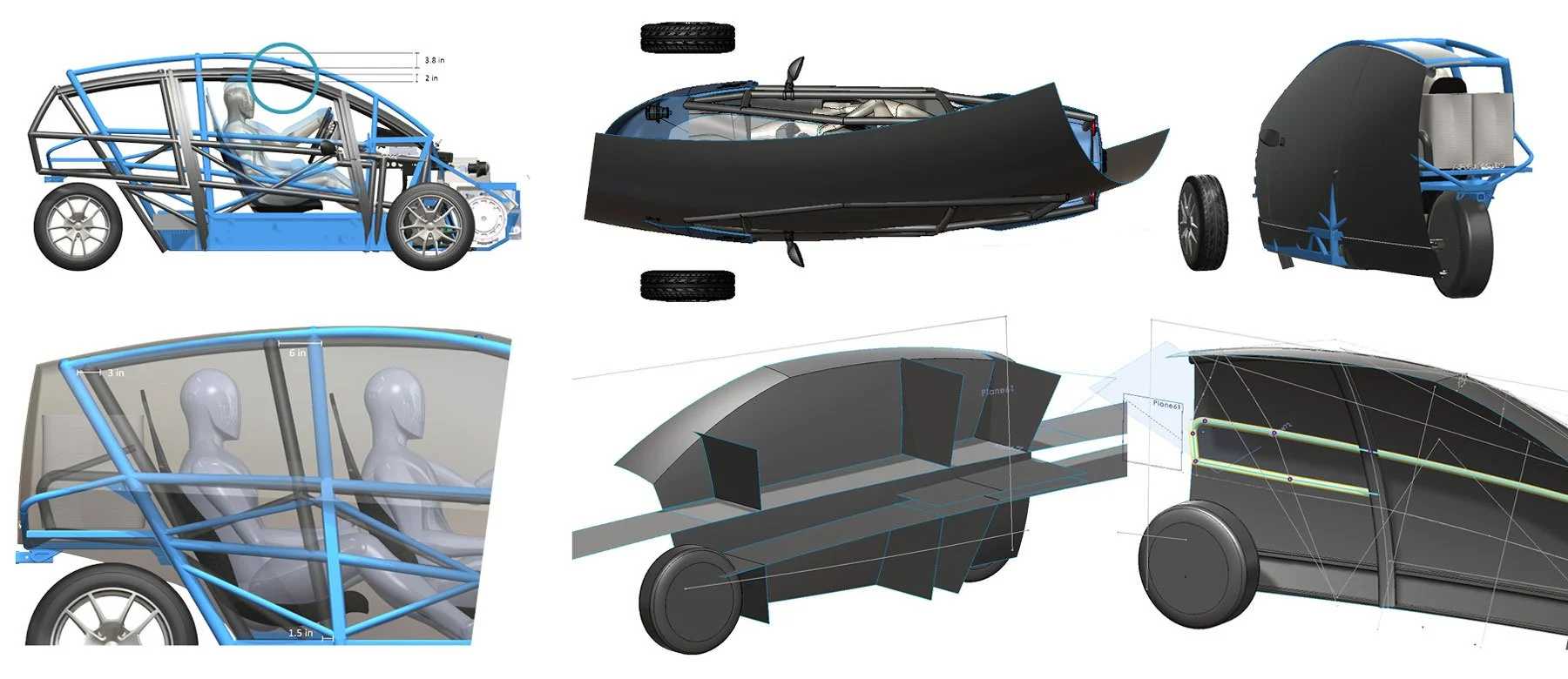
Gen7 is where the frame design role quietly inverted. On every other generation, engineering built the underlying architecture and design worked within it, sometimes with input, but the frame came first. On Gen7, the process ran backward: working closely with mechanical engineers, a curved surface was created to define the exterior first, with frame members mapped onto extruded sketch points along that surface, and only then handed to the MechE team to finalize structurally. The exterior didn't decorate the frame. It generated it.
One Platform, Many Jobs
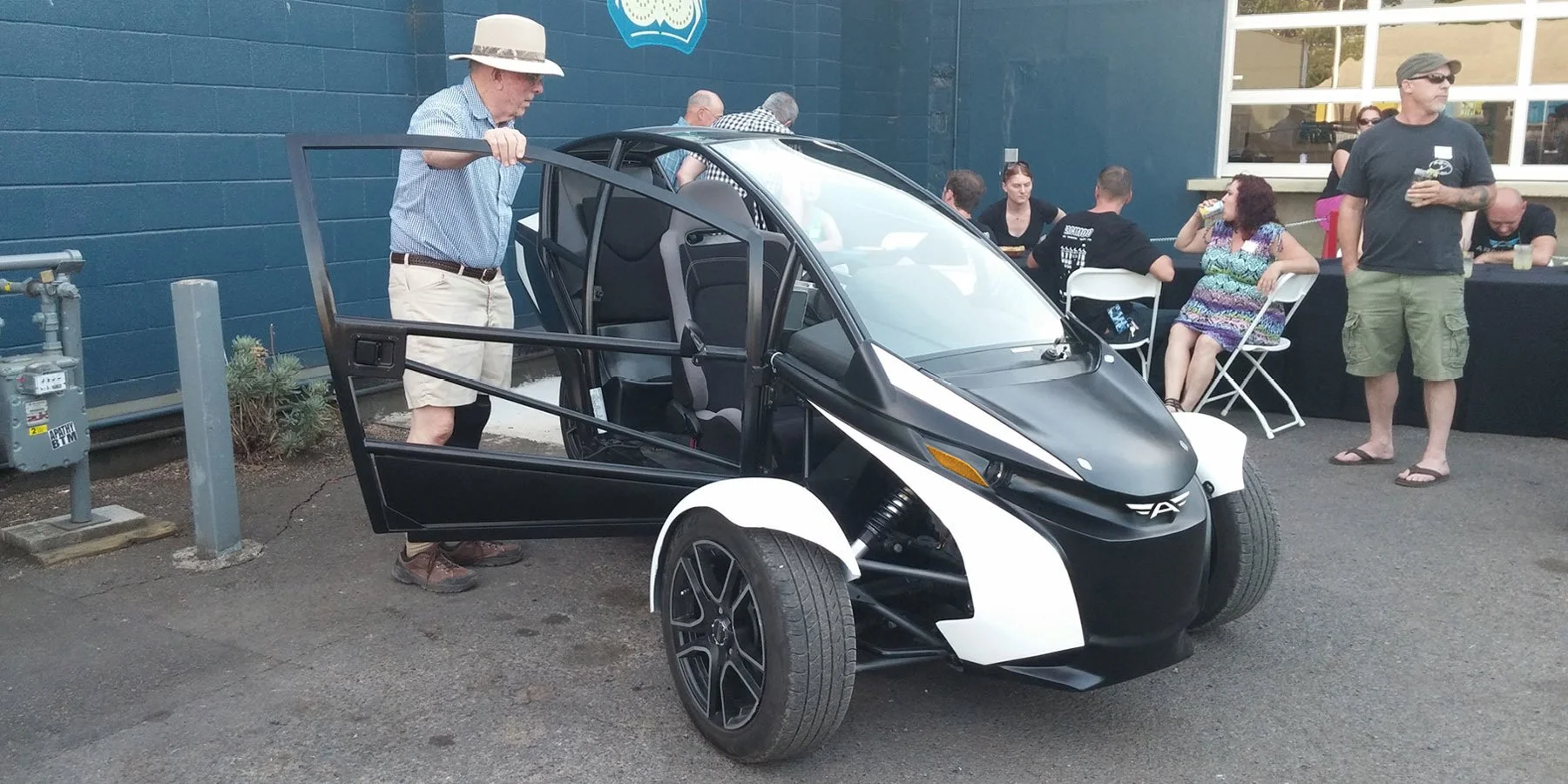
The open-frame layout wasn't just a styling direction, it was a platform strategy. The same frame that had to look right stripped bare also had to look right wearing many different jobs. Body paneling was designed to interconnect across a fully-enclosed variant, the "deliverator" delivery configuration, and the base open-air model, cutting down on the number of variant-specific parts Arcimoto would need to produce. The rear section went further, built to accept modular attachments for different passenger and cargo layouts, and concept imagery was produced showing the SRK reconfigured as a military vehicle, a police vehicle, and an airport runabout.
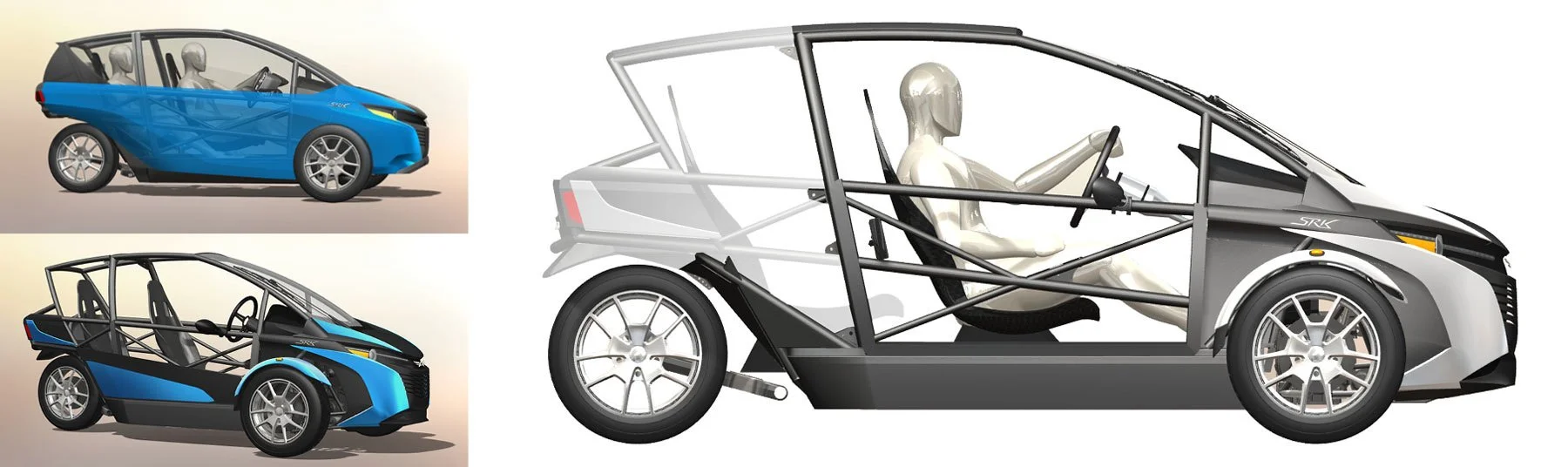
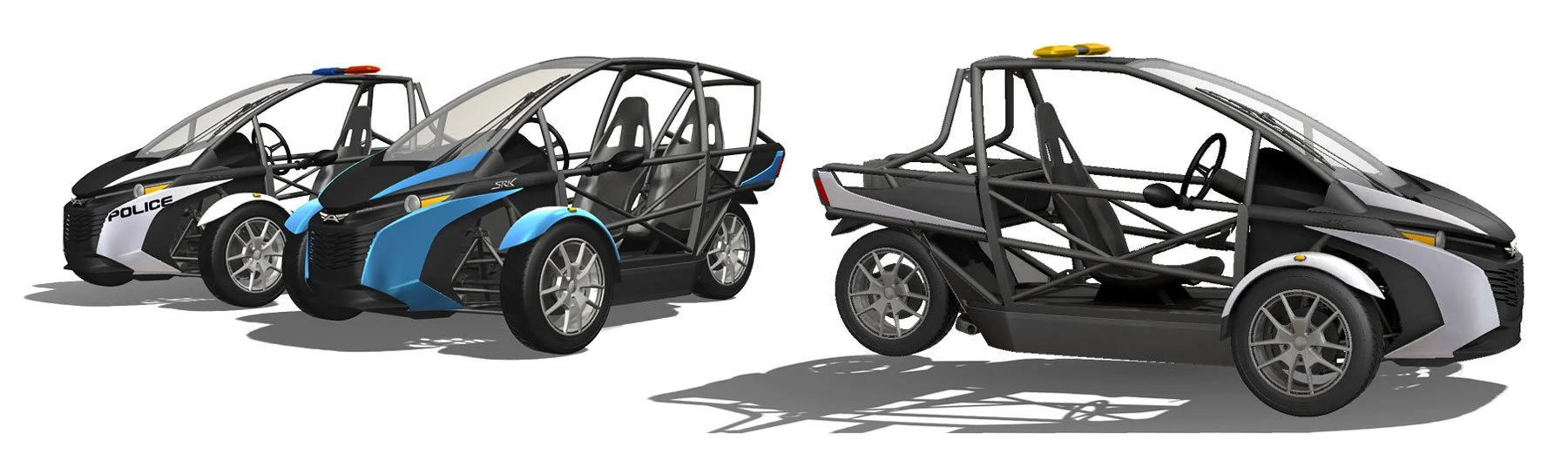
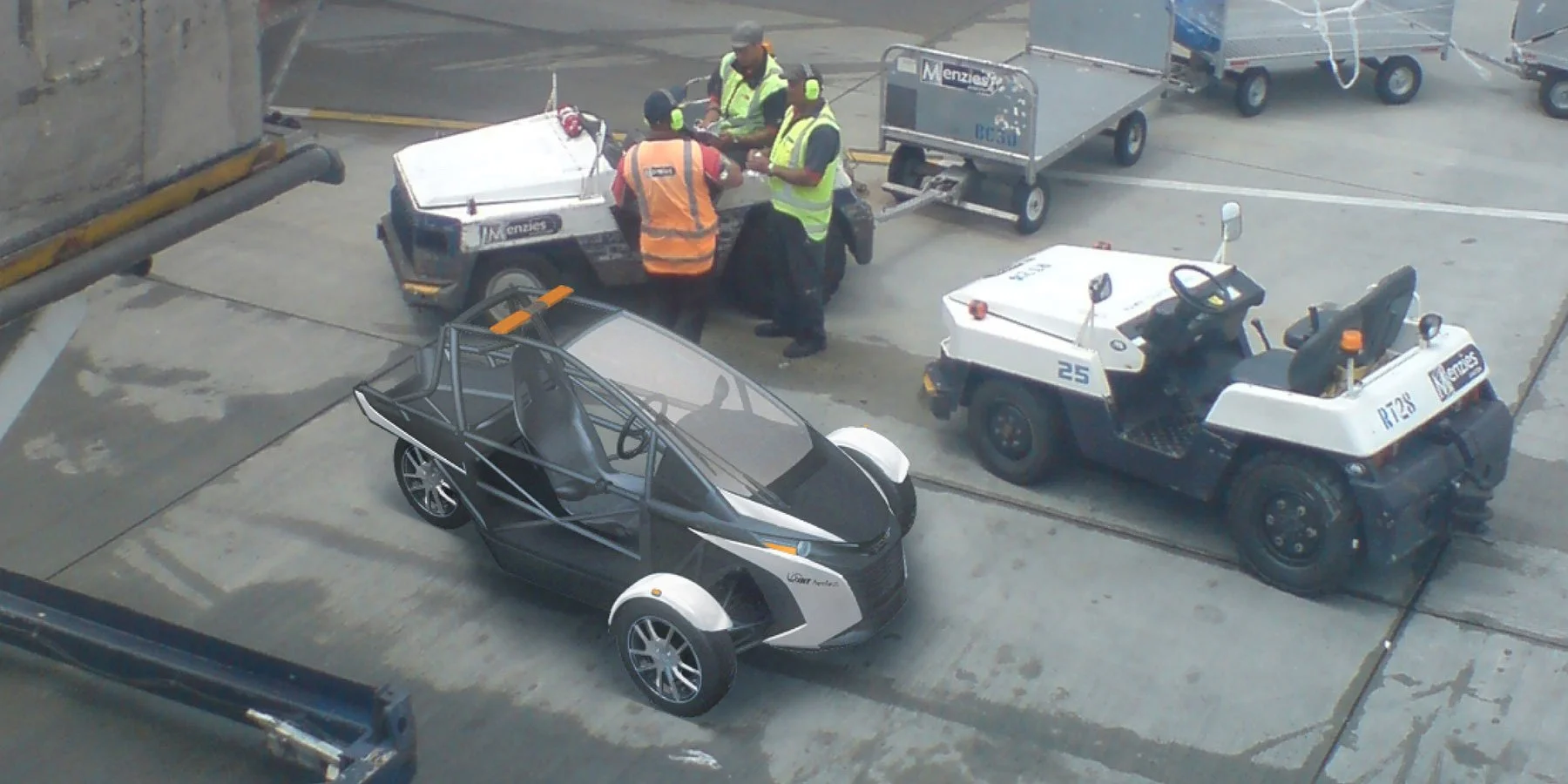
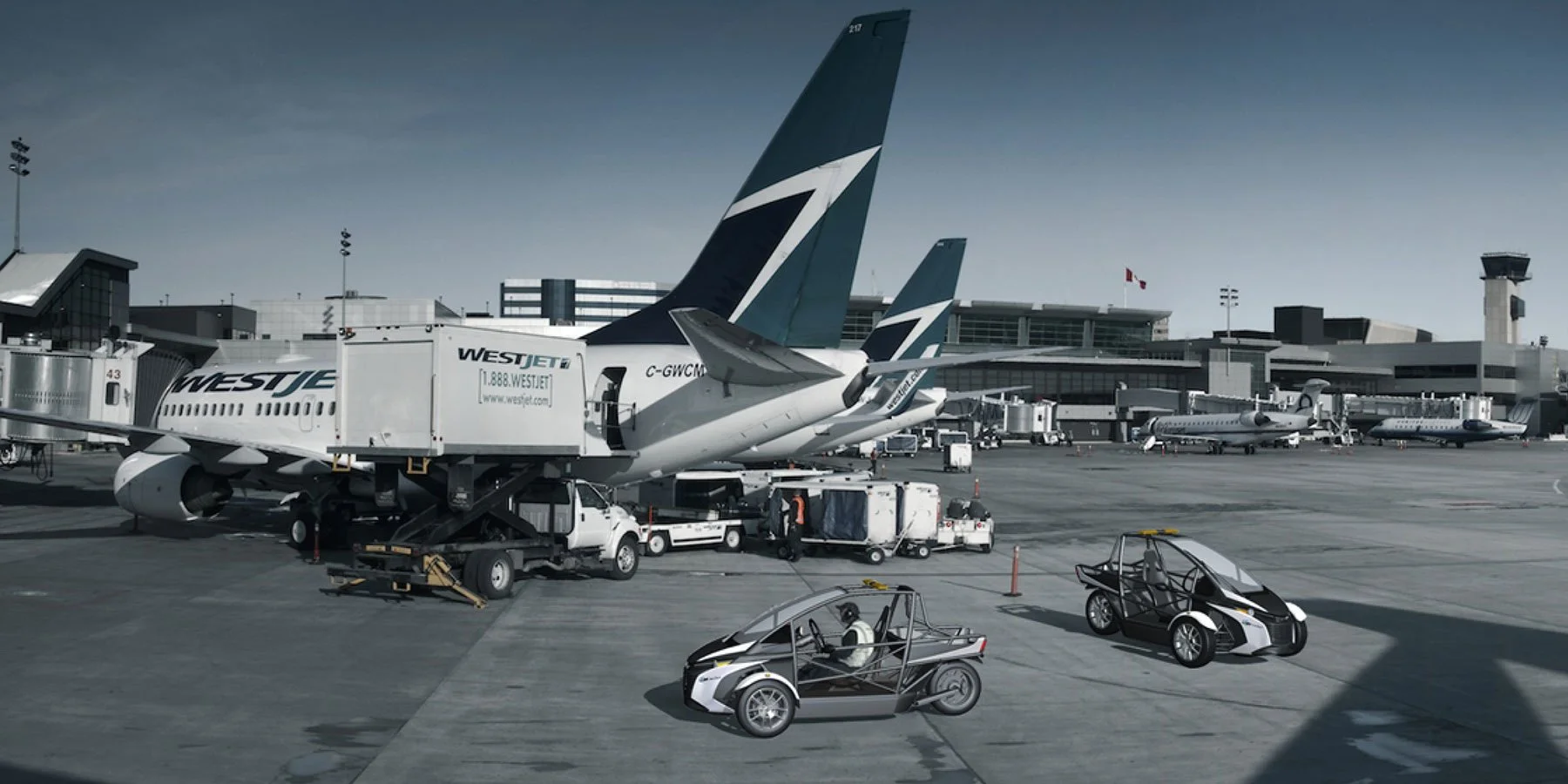
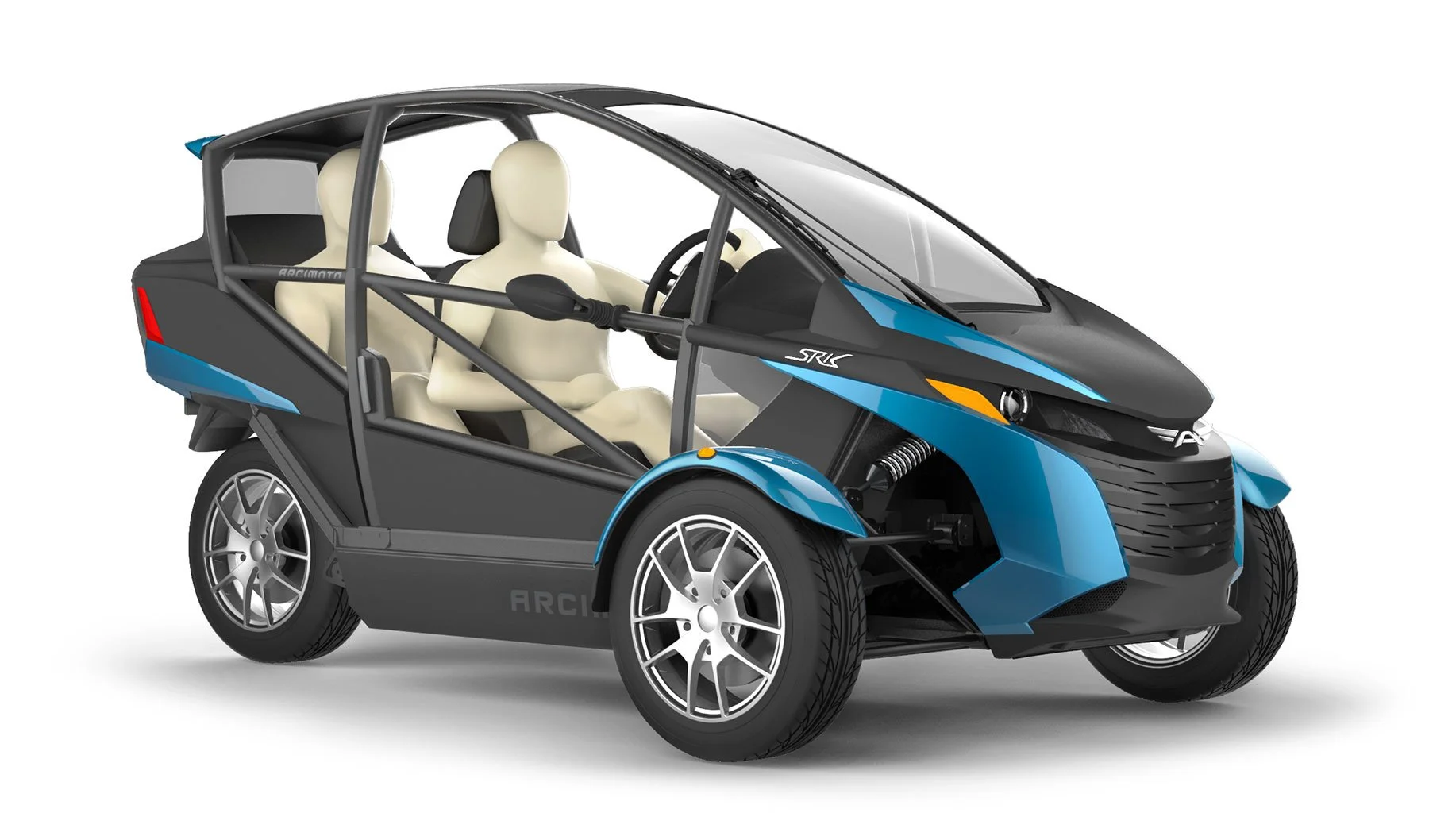
Gen7’s motorsport-inspired visual direction and maximized situational adaptability defined a new vehicle category. A vehicle that had started as a car substitute now looked, unmistakably, like nothing else on the road.
Act Three: A New Set of Constraints
Pivot Three: Compacting the Footprint, Battery Pack First (Gen8)
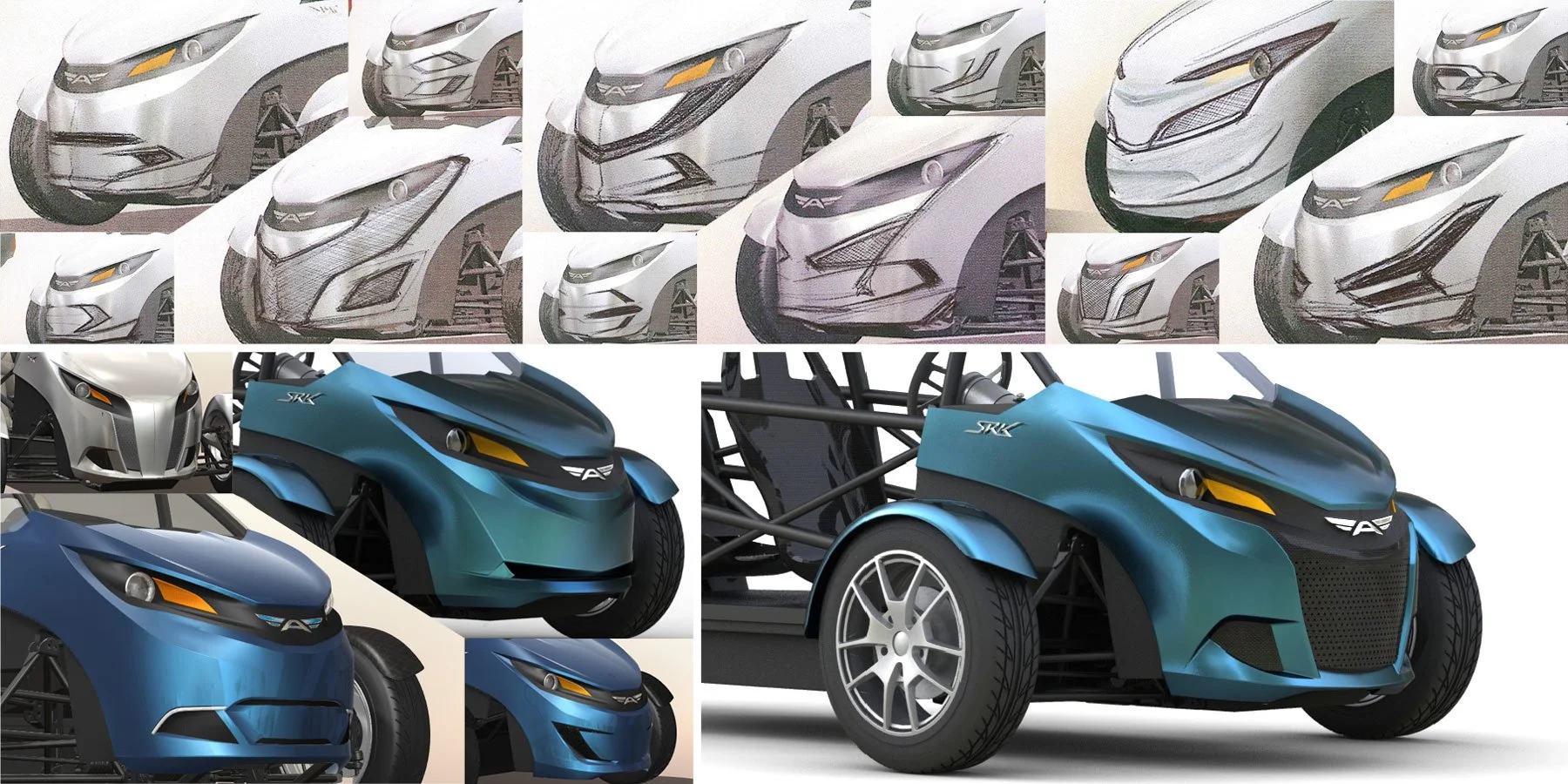
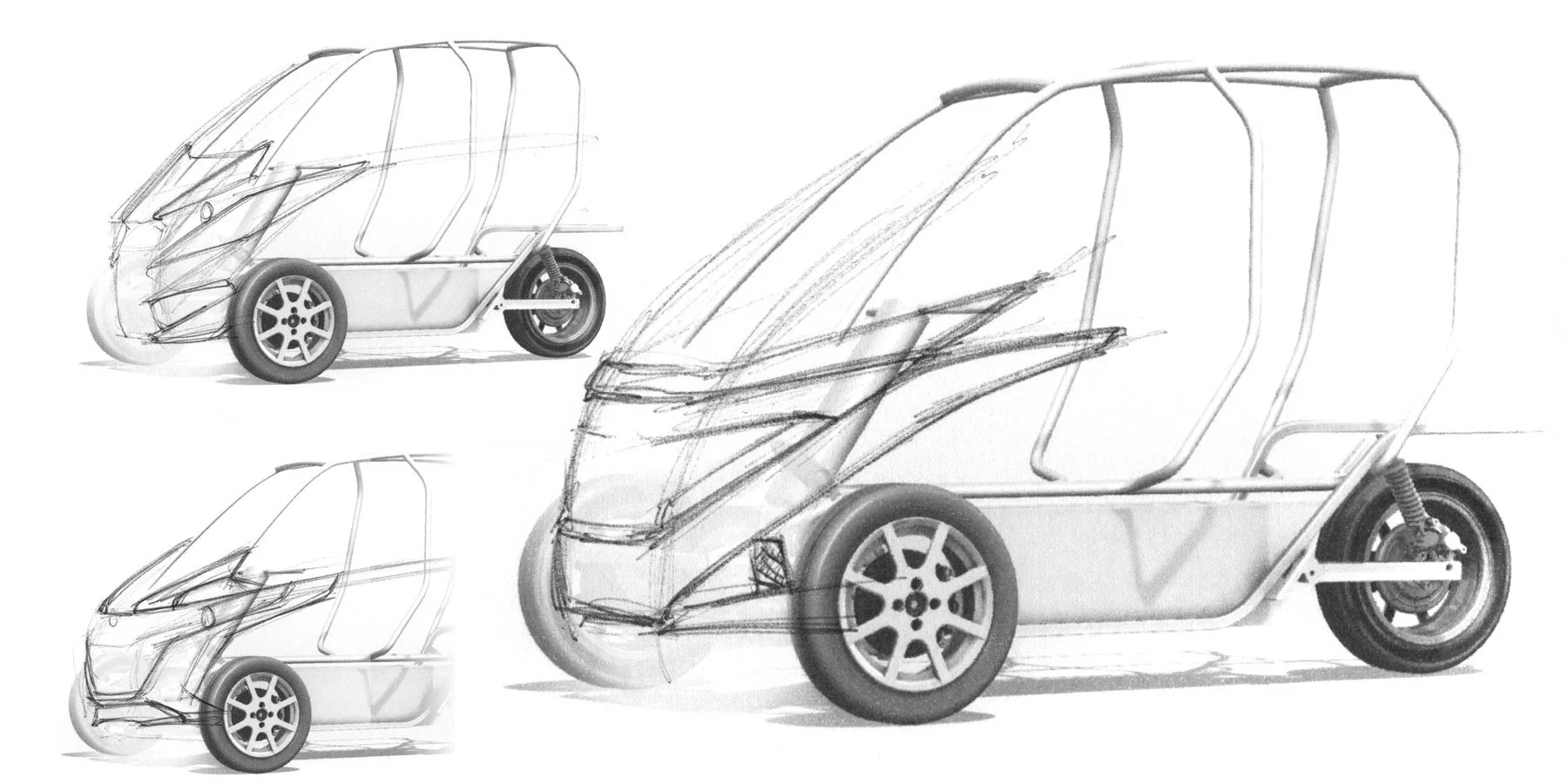
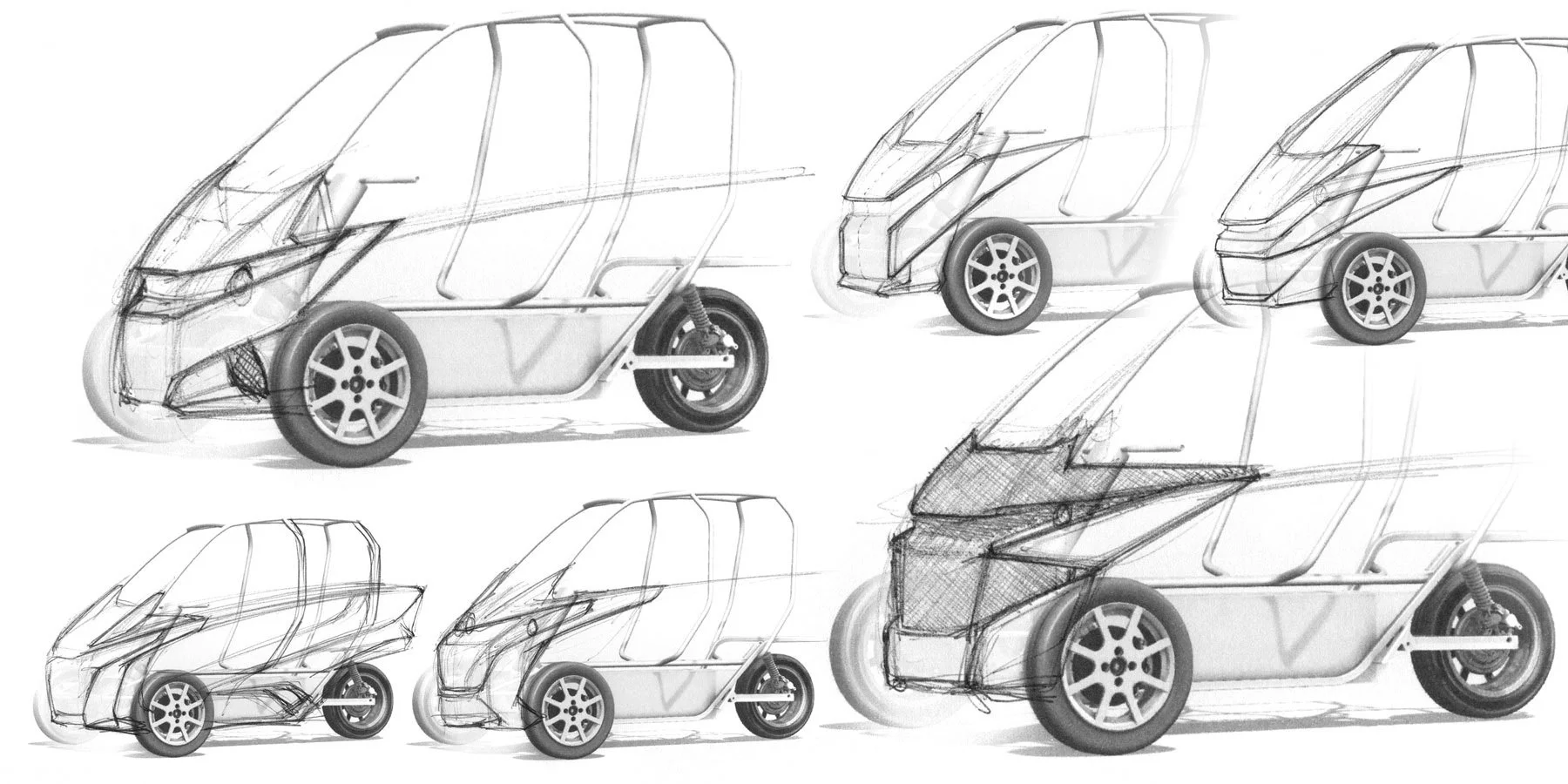
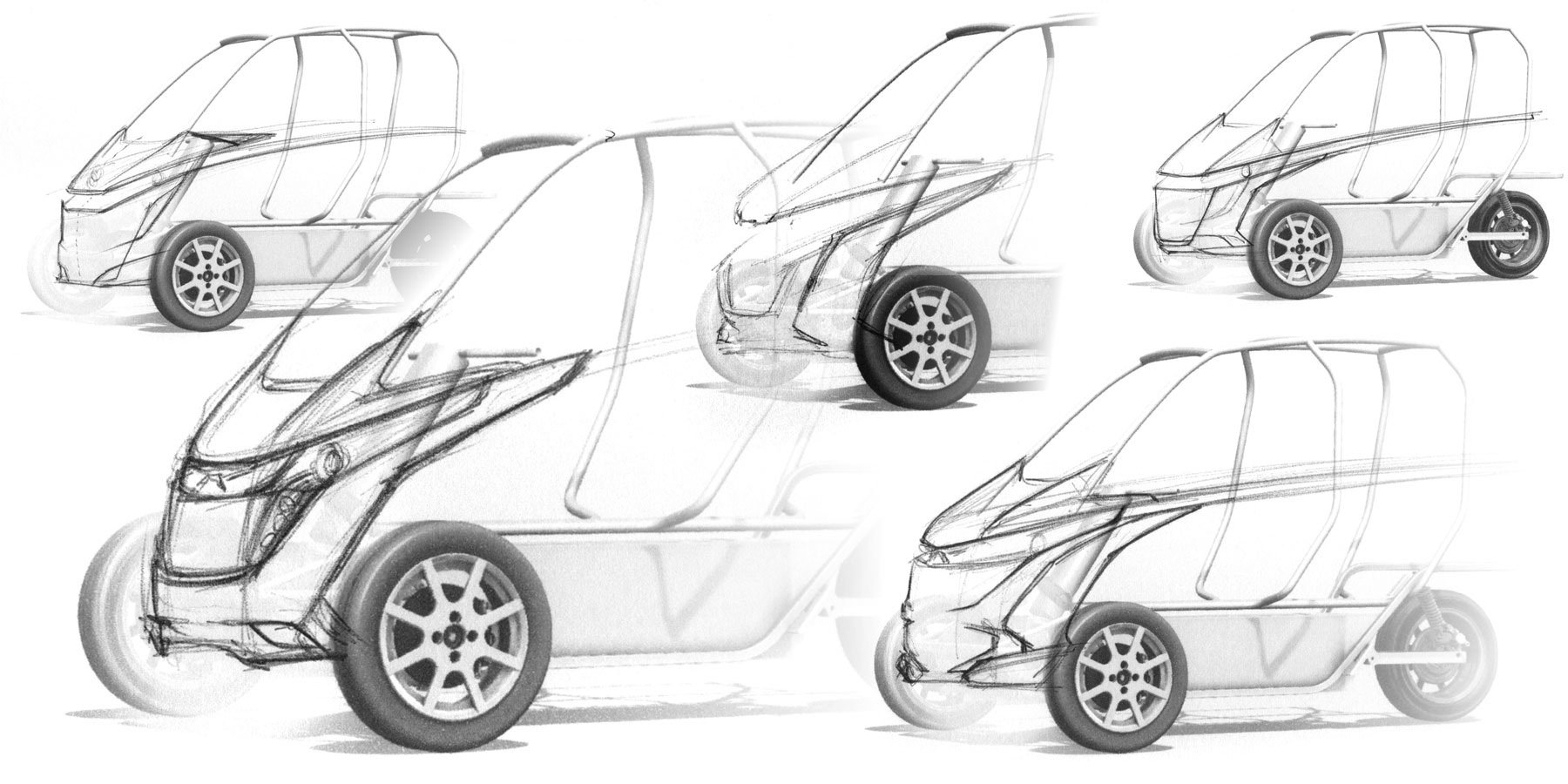
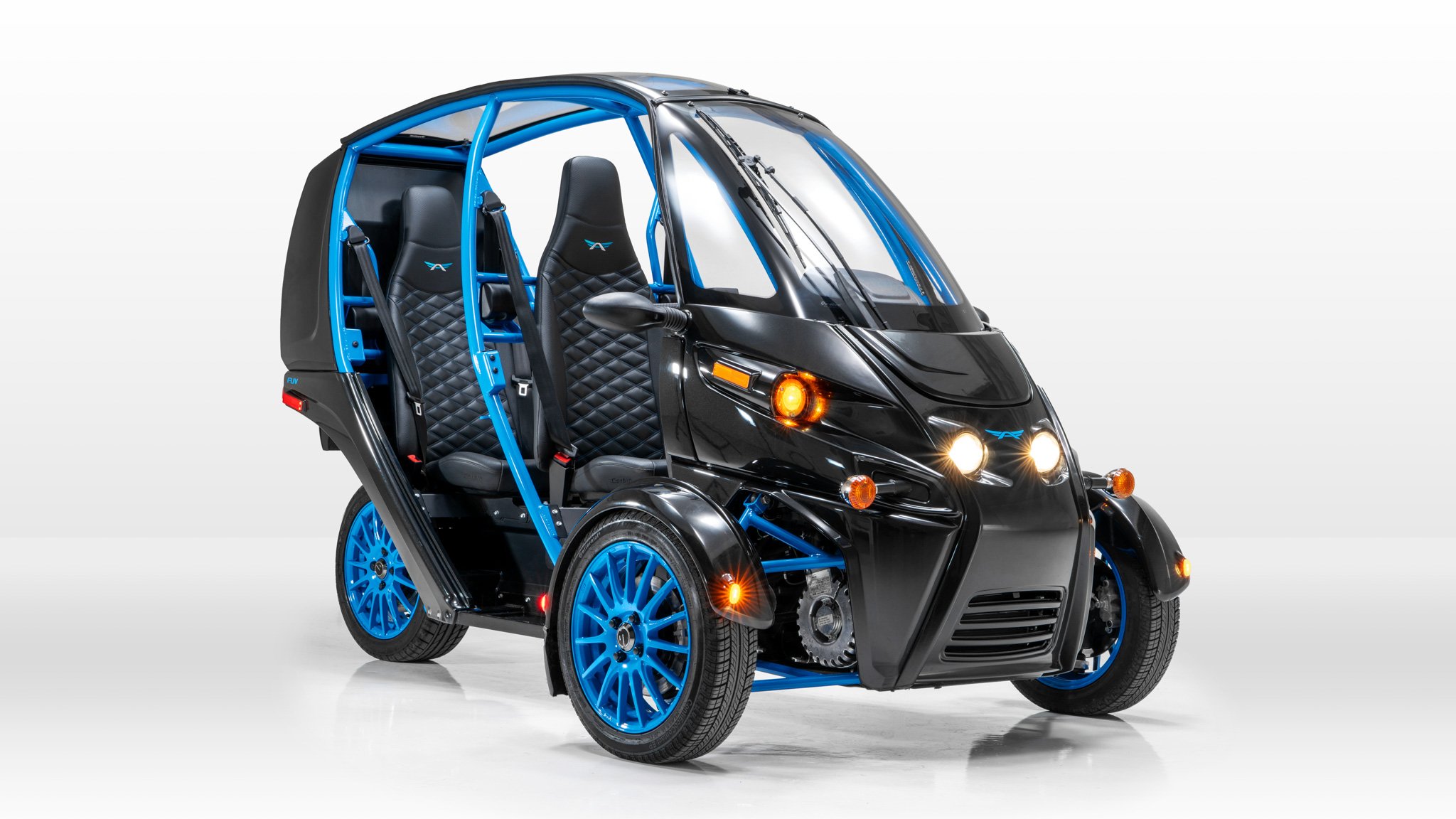
Gen8, the FUV, was the most structurally radical generation yet. The goal was a vehicle small enough for dense, emerging-market urban centers without losing the open-air character built up since Gen5. Batteries moved under the passenger, the steering wheel gave way to handlebars, and the chassis compacted to a length short enough that it was possible for the front end to become a continuous extension of the windshield surface.
Having become fully independent at this point, I was approached to provide options for the vehicle identity alongside other designers not directly employed by the company.
Designing Onto Someone Else's Frame
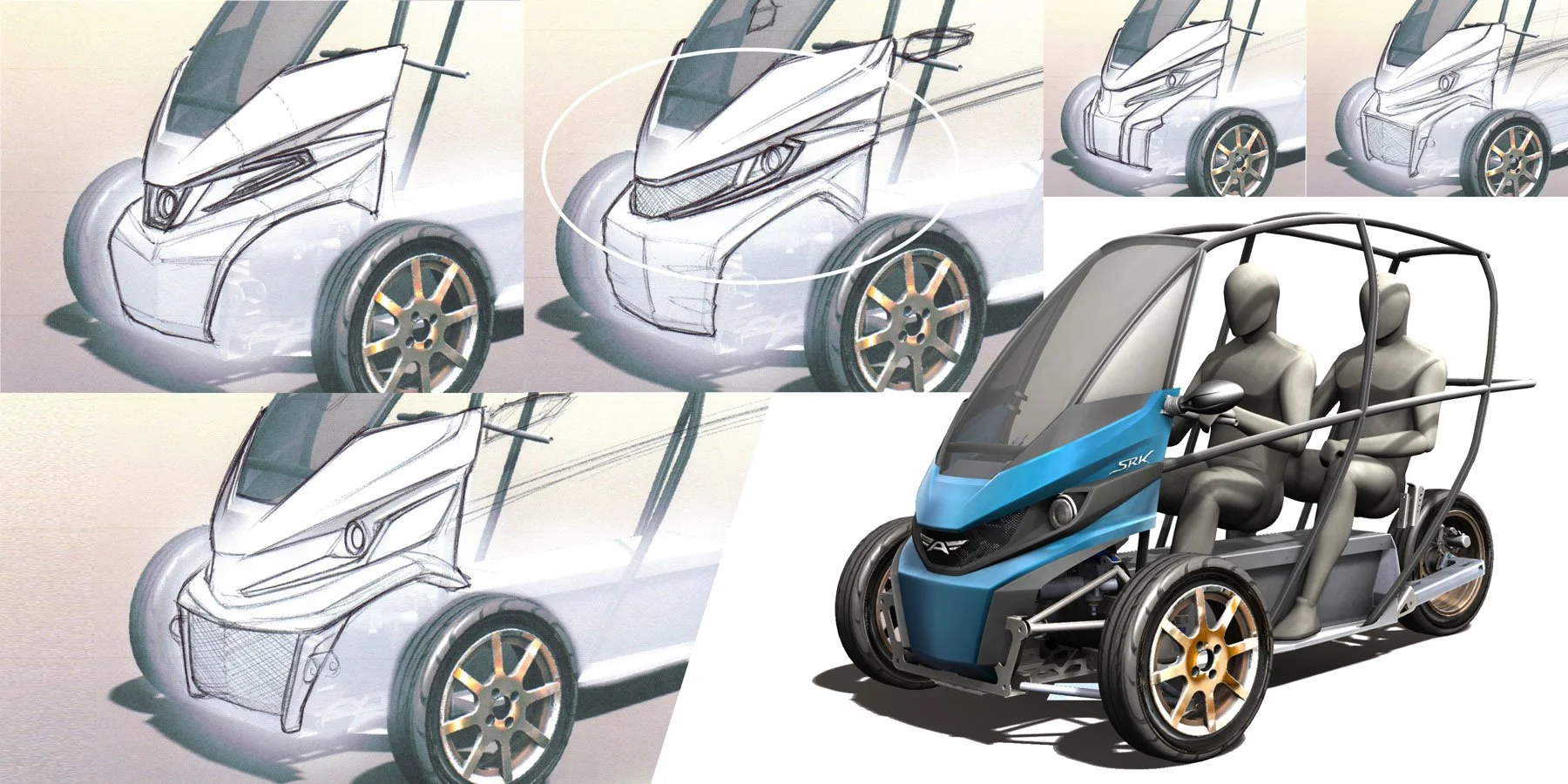
Having just authored Gen7's frame from the body outward, Gen8 reversed the relationship again. This time a compacted, already-fixed frame was handed over, and the job was to overlay an exterior design onto architecture that couldn't move. That's a different skill than either the earlier "style within an unmovable car-shaped brief" constraint or Gen7's "design the frame itself" freedom — It's surface-level problem solving under a hard structural ceiling.
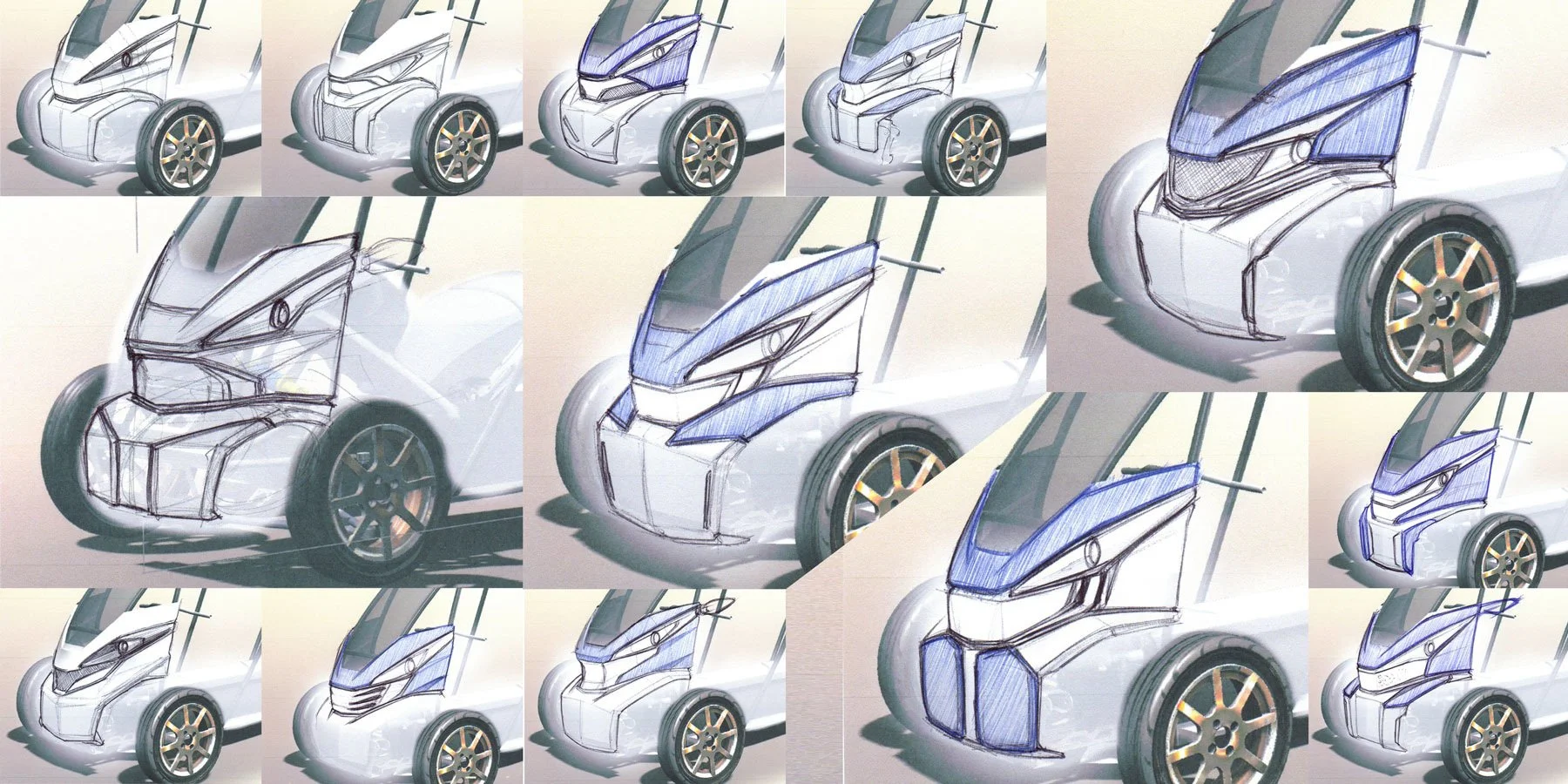
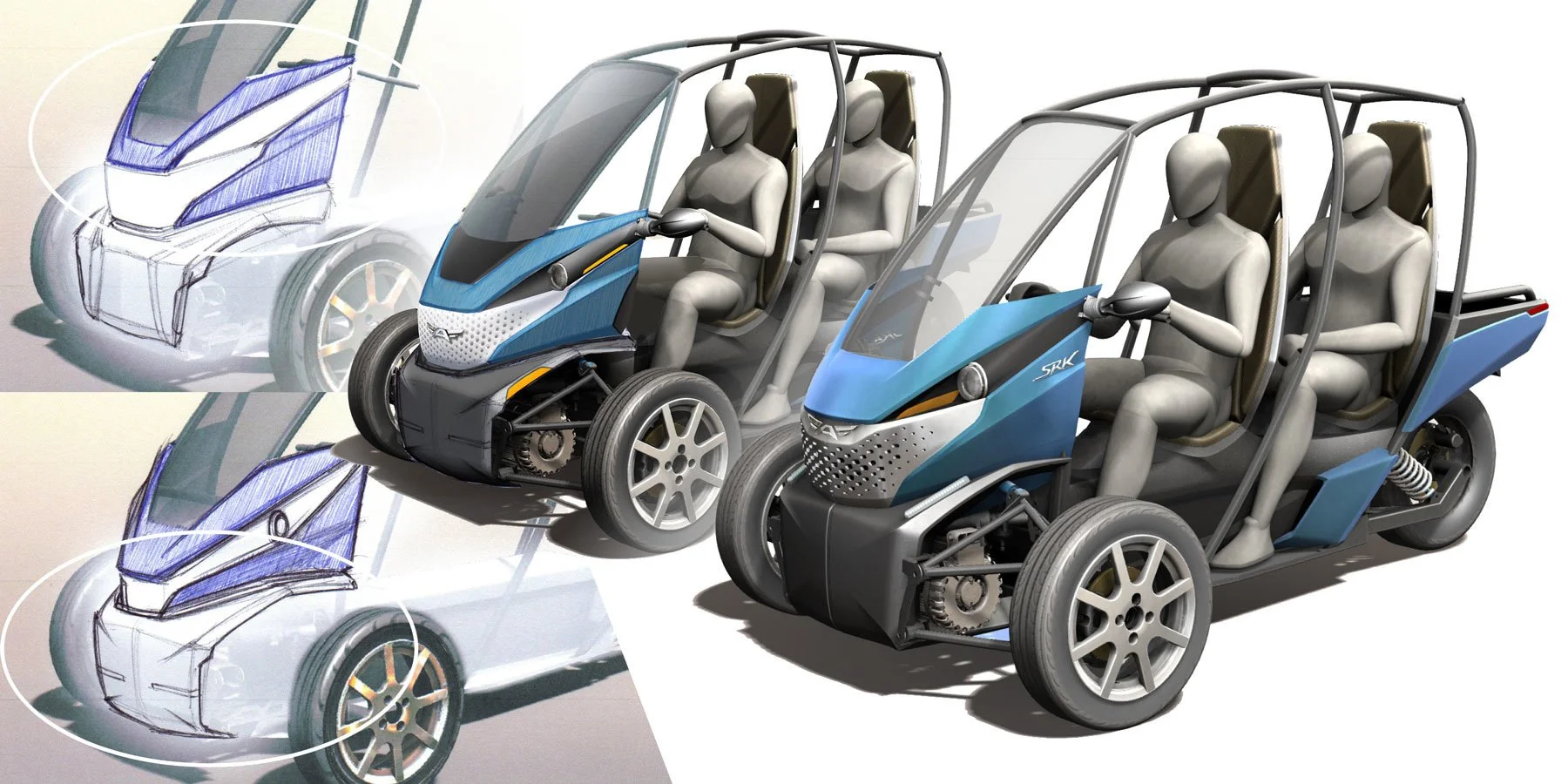
Visually separating the lower drive section (grille, motors, suspension) from the upper section (electronics, headlights) was of particular interest from leadership, so most of my concepts focused on solving for that.
Wrapping Up and Shipping the FUV
The direction that ultimately went into production on Gen8 came from another designer, not from this particular proposal. It's included here as the most recent chapter in a pattern that shaped this whole project from the start: designs getting rebuilt, refined, or replaced as the vehicle and the company both kept evolving.
With an identity selected, I provided consulting work to ready the concept for production, making various edits to the Class A surfacing all across the vehicle. Eight generations (six under my direct guidance) and three distinct strategic pivots later, the Arcimoto FUV was brought to production.
Asides
A Founding Identity Element, Unchanged
Before any of these generations existed, there was the company itself. I designed Arcimoto's original logo, the identity mark the company still carries today, work that predates and quietly underlies everything else in this case study. Every vehicle generation that followed needed to look like it belonged to something, and that something already had a name and a mark before Gen-3 ever reached a sketchbook.


The Interface Threading It All
Underneath every one of these exterior pivots ran a second, parallel project: the dashboard. Gen3's split gauge pods, Gen6 and Gen7's move to a single multipurpose screen, Gen8's continuation of that same screen-first approach: each generation's interior work was substantial enough to warrant its own dedicated case study.
See the companion case study, Arcimoto Dashboard: Designing a GUI Flattening from Analog to Digital, for the full breakdown of how that interface evolved generation to generation.

Kitefin Ultra-Aerodynamic Concept
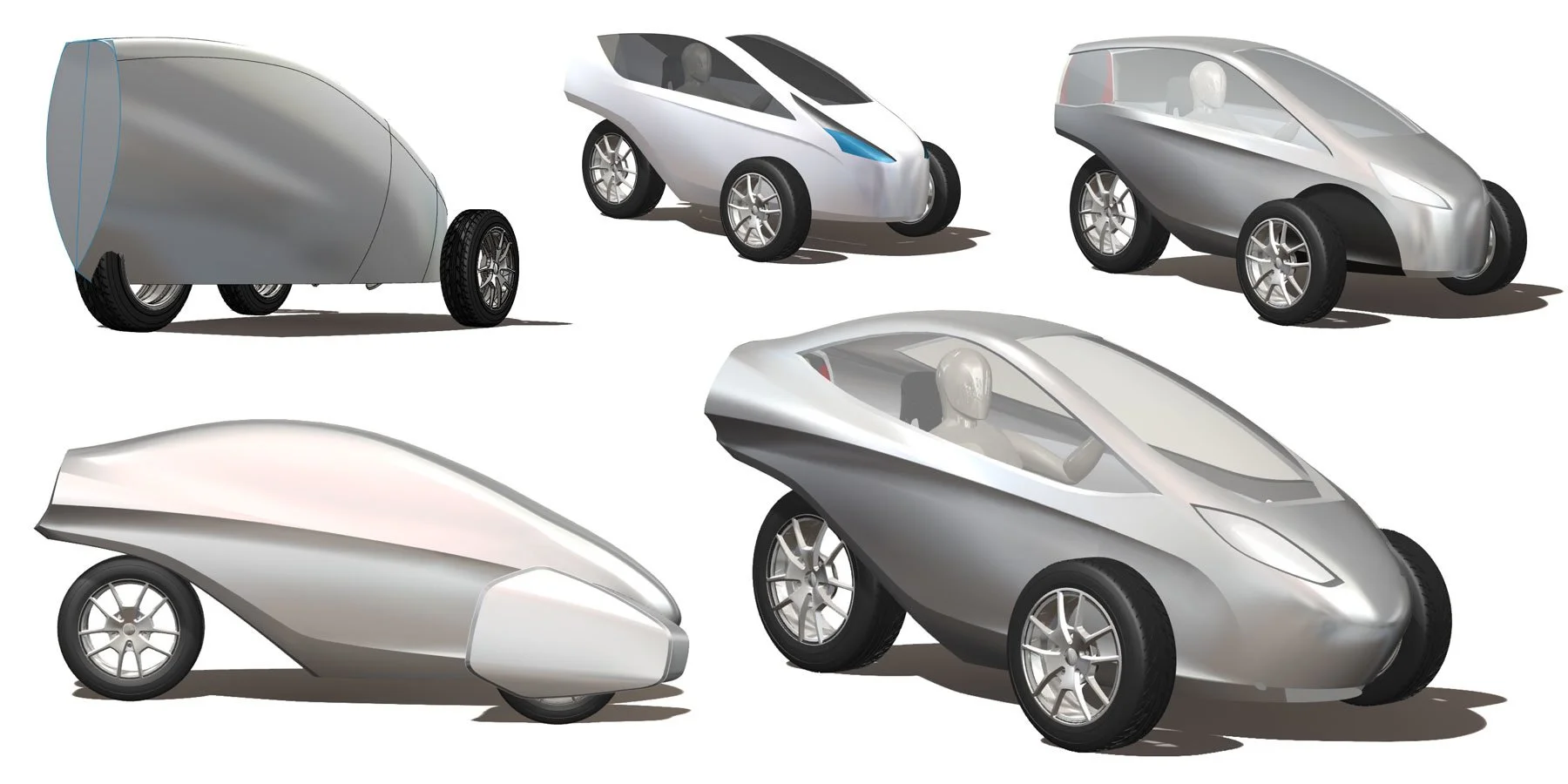
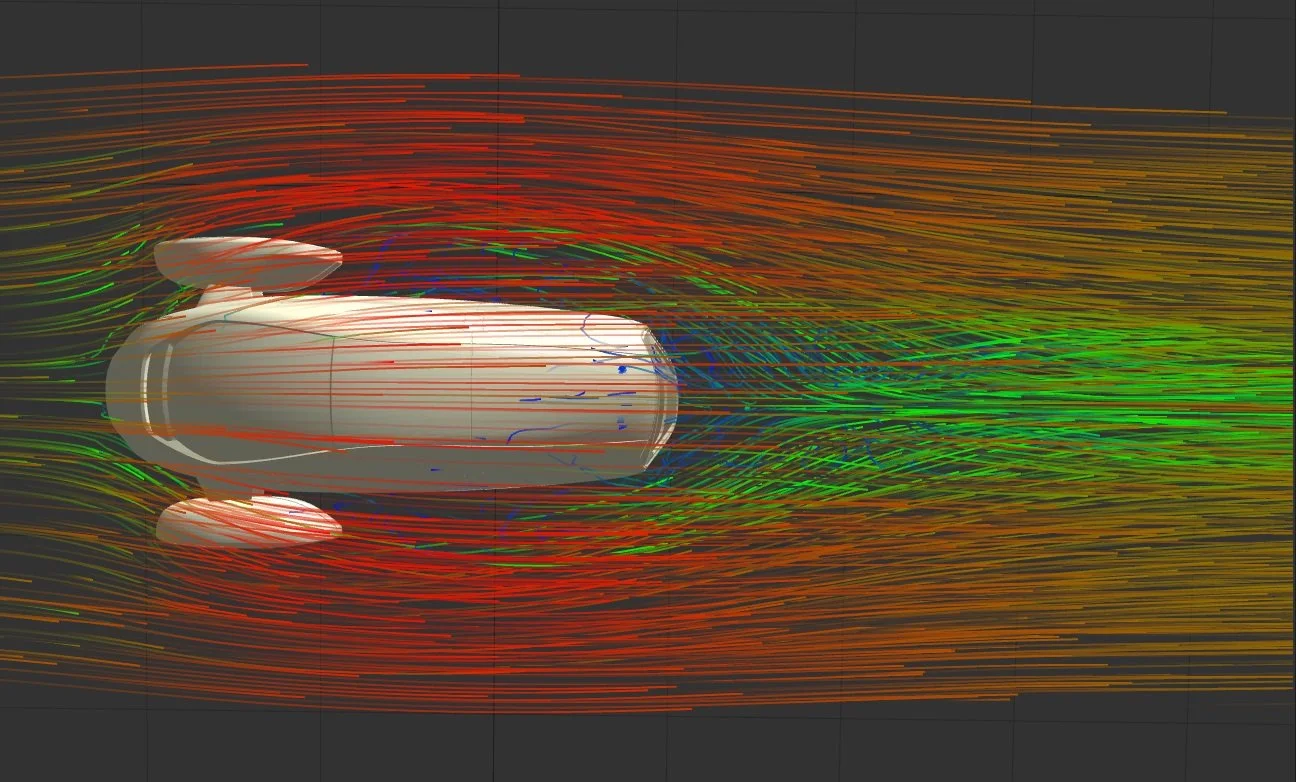
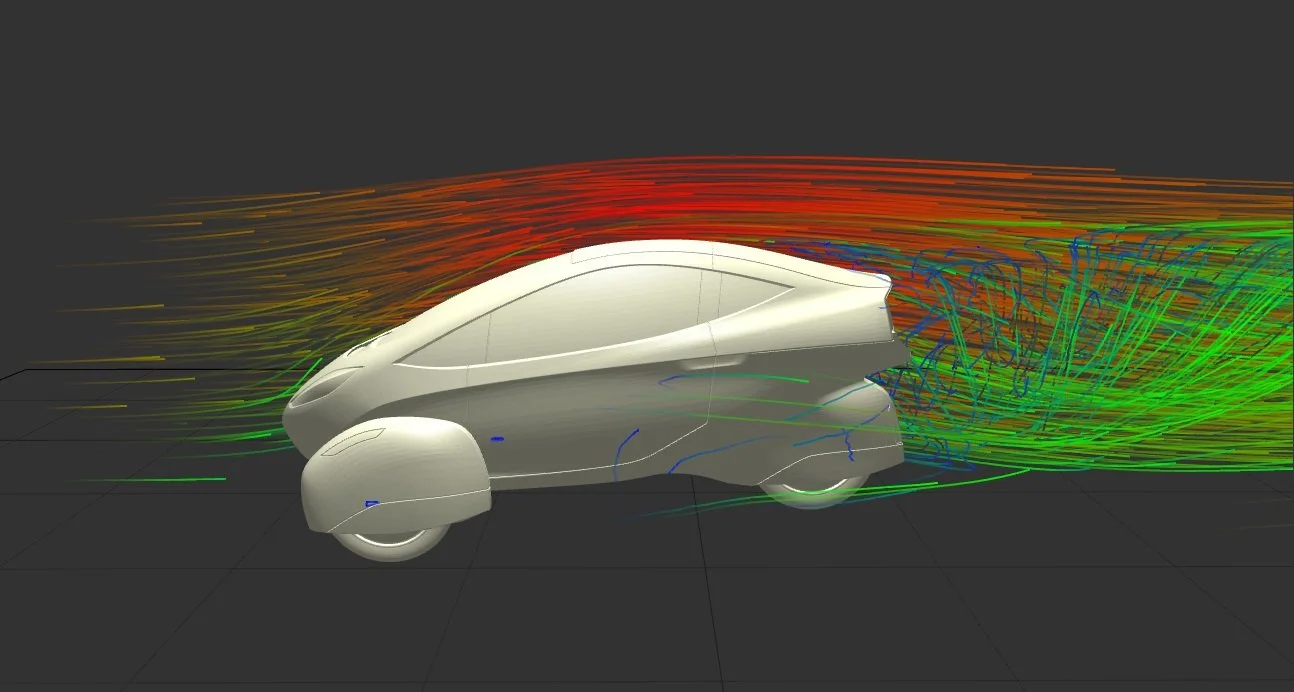
During Gen-5's development, I built Kitefin to give Arcimoto leadership a concrete visual for investor conversations about autonomous driving capability. With no driver expected to hold a wheel, the interior dropped every physical control in favor of displays and a large touchscreen for the single occupant, while the exterior chased pure aerodynamic efficiency: a minimalist nose, expressive headlights standing in for the intakes a combustion vehicle would need, and a solar-panel roof.
It's a useful pressure-release valve in this story: proof that even mid-generation, under a live open-air/motorcycle mandate, there was room to ask "what does this platform look like with the constraints removed entirely."
The Throughline
Arcimoto's own definition of its product changed more than once across this arc. Car-competitor to open-frame original, with the specific configuration shifting almost every generation. What stayed the same was the underlying job: take whatever the company had just decided it was building, and give it a form people could believe in.
Six generations, six different briefs, and not one of them let the design work stay still. The throughline isn't a specific shape. It's a design practice flexible enough to author a frame from the outside in on one generation, then take orders from a fixed frame on the next; to build ergonomic infrastructure that outlived the generation it was built for. That practice shipped: the production FUV that reached customers carried the handlebar control scheme, the open-air layout, and the identity language this arc built, generation by generation, from a single-seat sketch that never made it to market.
✎ Sketchbook Link(s)
See collected concept sketches from this project as well as previous Arcimoto generations.